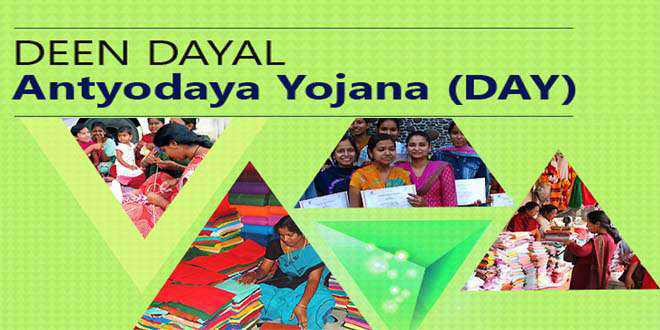
Deen Dayal Upadhyaya Antyodaya Yojana (DAY - NULM) The Deen Dayal Upadhyaya Antyodaya Yojana - National Urban Livelihood Mission (DAY - NULM) has been launched by the Ministry of Housing and Urban Affairs (MoHUA) in 2023 and is the flagship centrally sponsored scheme of India by name after a great leader Pandit Deen Dayal Upadhyaya. It is an integrated program by MoHUA, expecting the eradication of poverty in a sustainable kind of manner by means of sustainable livelihood and skill development and empowerment. DAY-NULM has been implemented in every state and Union Territory reaching 4,041 statutory towns which directly engages millions of urban poor individuals, poor households, street vendors and homeless individuals promoting pathways from poverty to prosperity, galvanized community engagements and structured support packages.
Core Objectives of DAY-NULM Objectives 1. Urban Poverty Alleviation The program aims to reduce urban poverty by generating sustainable livelihoods and nurturing the capacity to confront poverty at its source
2. Sustainable Livelihood Generation The program focuses on skills training that is pending on the market for beneficiaries to have reliable jobs or run successful micro-enterprises.
3. Entrepreneurship Development The program supports self-employment through financial assistance, business development service access, access to mentors and mentors to create an entrepreneurial climate among poor urban communities.
4. Secure Shelter Construction and maintenance of permanent night shelters across cities to ensure affordable and secure accommodation for the urban homeless population.
5. Street Vendor Inclusivity The program recognizes and provides support to the street vendors; the funding will be used for financial assistance, legal guidance and capacity building in setting up the infrastructure related to the organization of vendor zones.
Comprehensive Components of DAY-NULM Self-Employment Program (SEP) Financial Support Features: 1. Individual micro-enterprises: Loan up to ₹2 lakh with interest subsidy
2. Group enterprises: Loan up to ₹10 lakh for group enterprises
3. Special category beneficiaries: Additional subsidy rates
Business Development Services 1. Market linkage
2. Technology transfer
3. Assistance on development of business plan
4. Post-loan hand-holding up to 2 years
Employment through Skill Training and Placement (EST&P) Training Framework: 1. Sector-specific skill development courses
2. Number of hours: 200-600 hours, based on trade requirements
3. Delivery partners: Recognized training providers and industry partners
Placement Guarantee: 1. 70% placement guarantee
2. Focus areas for placement: Healthcare, beauty & wellness, security, retail, hospitality no parlor
Support to Urban Street Vendors (SUSV) Comprehensive Support to Vendors: 1. Id card for legal recognition
2. Loan amounts - working capital loan of ₹10,000 first, and 50,000 subsequently
3. Vending zone with basic infrastructure
4. Social security coverage -insurance schemes in case of an emergency
Innovative & Special Projects Pilot Initiatives: 1. Technology-driven livelihood solutions
2. Climate resilient livelihood programs
3. Disabled-friendly employment opportunities
4. Women-specific entrepreneurship initiatives
Eligibility Criteria and Target Beneficiaries Primary Target Groups Urban Poor Households: 1. Households below poverty line in urban areas
2. Families with irregular income sources
Vendors: 1. Registered vendors with Urban Local Bodies (ULBs)
2. Vendors operating without legal recognition
3. Mobile and stationary vendors across all categories
Urban Homeless: 1. Individuals without adequate shelter
2. Migrant workers in urban areas
3. Families living on streets or in temporary structures
Self Help Group Members: 1. Women from urban poor families
2. Existing SHG members seeking livelihood support
3. Community volunteers and social workers
Funding Mechanism and Implementation Structure Financial Framework Funding Pattern: 1. General States: 60% Central share, 40% State share
2. North-East and Special Category States: 90% Central, 10% State
Total Allocation (2024-25): 1. ₹4,500 crore for complete implementation
2. Allocation to states based on urban poor population
3. Variable additional allocation based on performance
For Individual Beneficiaries 1. Income increase of 2-3 times per month on average after intervention
2. Provider and the family having access to formal banking and credit
3. Have minimum insurance coverage and/or social security benefits
Skill Development: 1. Training on market-compatible technical skill
2. Development of soft skills
3. Ability to access continuous learning through digital resources provided by the Mission
For Communities Social Capital Building: 1. Strengthened community organizations and leadership
2. Enhanced collective bargaining power
3. Improved access to government schemes and services
Infrastructure Development: 1. Better vending zones with adequate facilities
2. Permanent night shelters reducing urban homelessness
3. Community centers for skill training and meetings
Implementation Challenges and Solutions Beneficiary Identification: 1. Difficulty in effectively identifying real urban poor
2. Constantly moving urban population
3. Documentation issues for homeless and migrant population
Awareness and Outreach: 1. Language barriers in multilingual urban settings
2. Distrust of government schemes
Infrastructure Gaps: 1. Lack of shelter facilities in many cities
2. Limited availability of training infrastructure for skill development
3. Insufficient vending zones available to total vendor population
Government Progress and Digital Initiatives (2025) Key Achievement Quantitative Impact: 1. 15.8 lakh SHGs formed with over 1.65 crore members
2. 32 lakh individuals trained under skill development programs
3. 1,242 permanent shelters constructed across 968 cities
4. 42 lakh street vendors provided identity cards and support
Digital Transformation: 1. DAY-NULM Mobile App for beneficiary services
2. Digital payment systems for transparent fund transfer
3. Online training modules for skill development programs
Recent Policy Updates Enhanced Support Measures: 1. Increased loan limits for micro-enterprises
2. Simplified documentation requirements
3. Integration with other government schemes like PM-SVANidhi
Conclusion DAY-NULM (Deen Dayal Upadhyaya Antyodaya Yojana) is India's comprehensive strategy for urban poverty alleviation moving beyond welfare to empowerment through sustainable livelihoods. By bringing together self-employment promotion, skill development, street vendor support, and rehabilitation of the homeless, Day-NULM opens multiple routes out of poverty.
The strength of the program is the community-driven approach whereby beneficiaries are shareholders in their own development journey. Through the collective organization of SHGs, federations and enterprises, Day-NULM not only builds individual capacity but full ecosystems of support and growth.
As India continues to urbanize, Day-NULM will continue to play a vital role in ensuring that urban growth is coupled with inclusive development where no one is left behind in our journey toward developed nation status.
FAQs 1. What is the main objective of DAY-NULM? DAY-NULM focuses on reducing urban poverty through the creation of sustainable livelihoods by promoting both self and wage employment, enhancing both skills, and providing complete assistance to the urban poor, street vendors, and the homeless.
2. Who is eligible to avail of the scheme under DAY-NULM? Any household from the urban poor, street vendors (registered or unregistered), homeless persons, members of Self-Help Groups (SHGs), Unemployed youth from urban poor families can avail of one or other components of DAY-NULM.
3. What is meant by financial assistance under the scheme? Individual entrepreneurs up to ₹2 lakh, groups on the established norm would get the loan up to ₹10 lakh, working capital loan for street vendors up to ₹50,000, all entailing interest subsidy.
4. How do street vendors get benefits in DAY-NULM? Street vendors will get identity cards, working capital loans, vending zones with infrastructure, statutory protection, and social-security schemes.
5. DAY-NULM is only for Metropolitan Cities? No, DAY-NULM has been implemented in all the 4041 statutory towns in the country; it also includes a significant number of small towns and aims for the largest coverage for urban poverty alleviation.
6. Who are the implementing agencies of DAY-NULM? Urban Local Bodies (ULBs) are primary implementing agencies. The State Urban Livelihood Missions (SULM), SHGs, federations, and other community institutions can support ULBs in being cognizant of different features.
.png)
-compressed.jpg)
.jpg)


.png)
.png)
.png)
.png)