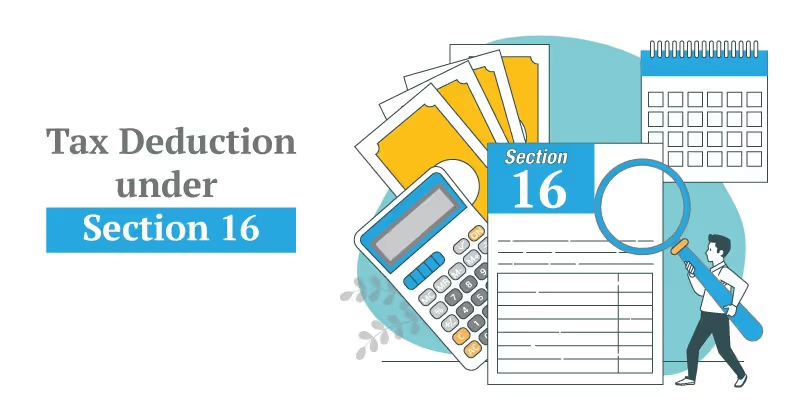
Entertainment Allowance under Section 16 (ii) of Income Tax Entertainment Allowance is a scheme under which an employer compensates the employees for certain expenses for entertaining clients, guests, or other officials. In addition, the Income Tax Act of 1961 In this article, we shall cover the scope of Entertainment Allowance under Section 16(ii), the scope of its applicability, the limits to be observed for the claim and the impact of the allowance on tax obligations.
What is Entertainment Allowance under Section 16(ii)? There is an Entertainment Allowance which is an allowance by the employer to the employees to enable them to carry out some expenses for their clients or guests on behalf of the employer. Nevertheless, this dollar amount is taxable as a salary
Moreover, Section 16(ii)?A tax that allows certain deductions for government employees such as Section 16(ii) Entertainment Allowance only limits Non-government employees to any form of deduction amount. In this manner, Non-government employees do not gain any specific deduction.
Eligibility for Entertainment Allowance Deduction Section 16(ii) deduction is there only to the employees including the common civilians employed by the Central Government and those employed by that Government State. All other employee categories such as those working for private organizations and even public sector unit employees are not qualified for this deduction. Children are also exempted from the enjoyment of the deductions.
How is the Deduction Calculated? The purpose contained under Section 16(ii) to ban the deduction for Entertainment Allowance is the least of the following three amounts.
₹5,000: This is the upper limit deduction amount.
20% of Basic Salary: In the case of employees, this allowance is restricted to twenty per cent of their basic salary (do not count any other allowances).
Actual Entertainment Allowance received: This covers the actual amount of Entertainment Allowance
Accordingly, the amount which a government employee has an entitlement to is the lowest of the above three.
Note:
“Basic Salary’’ means basic pay only and does not include any allowances, benefits etc.
All the relevant deductions are allowed to only government employees.
First, such Entertainment Allowance is added to the salary paid to the employees and then the limit is paid based on the above calculations.
Example of Entertainment Allowance Calculation Let’s consider one example in which we see how the deduction is determined under Section 16(ii).
Example:
Employee’s Basic Salary: ₹2,40,000 per year
Entertainment Allowance earned: ₹12,000 per year.
Now, let's calculate the deduction: Fixed maximum limit: ₹5,000
20% of Basic Salary = 20% of ₹2,40,000 = ₹48,000
Actual Entertainment Allowance received = ₹12,000
The deduction will be the least of the above amounts, i.e., ₹5,000 .
Steps for Claiming a Deduction under Section 16(ii) Further Deduction for Entertainment Allowance
Steps to Claim the Deduction under Section 16(ii) In the professional sphere, Hong Kong traders are required to provide accounts of likely gains. An entertainment allowance deduction can be taken in the following steps.
Add the Entertainment Allowance: First, the total Entertainment Allowance available during the year would be added as the taxable civil and excise salary of the employee.
Compute the Deduction: The deduction amount is computed as the least of 5000, 20% of basic pay or the amount received actually.
Claim in ITR: The deduction can be availed at the time of filing an income tax return
Entertainment Allowance for Non-Government Employees There is no tax deduction available on Entertainment Allowance for employees working with private organizations, PSUs, public sector banks or any other non-government organizations. In the case of such employees, the Entertainment Allowance is completely taxable and forms a part of gross salary for purposes of taxation.
Tax Implications of Entertainment Allowance In the case of Government employees, Entertainment Allowance is taxed in the salary head but they are allowed to take deduction u/s 16(ii).
In case of non-Govt. Employees, the figure of Entertainment Allowance is charged to tax in full and no section 16(ii) relief is available.
Conclusion Entertainment Allowance for Government employees is one such facility under the provision of Section 16(ii) of the Income Tax Act
FAQs Who is eligible to claim the Entertainment Allowance deduction under Section 16(ii)? Only certain government employees i.e. Central and State Government Employees are eligible to argue for claiming the deduction for Entertainment Allowance under Section 16(ii). Non-government employees cannot.
What is the entertainment allowance exemption under Income Tax? The entertainment allowance exemption is a benefit provided under Section 16(ii) of the Income Tax Act, allowing government employees to claim a deduction on the entertainment allowance they receive, subject to certain conditions.
How is the entertainment allowance for government employees calculated? For government employees , the entertainment allowance is deductible from gross salary, and the exemption is the least of the following: ₹5,000, 20% of basic salary, or the actual entertainment allowance received.
What is the maximum deduction available under Section 16(ii)? The maximum allowance which is claimable under section 16(ii) is for Rs 5,000 only.
Is the deduction available for all types of allowances received by government employees? No, the relief under section 16(ii) is available only for Entertainment Allowance. Other allowances may be taxable differently.
Entertainment Allowance under Section 16 (ii) of Income Tax Entertainment Allowance is a scheme under which an employer compensates the employees for certain expenses for entertaining clients, guests, or other officials. In addition, the Income Tax Act of 1961 In this article, we shall cover the scope of Entertainment Allowance under Section 16(ii), the scope of its applicability, the limits to be observed for the claim and the impact of the allowance on tax obligations.
What is Entertainment Allowance under Section 16(ii)? There is an Entertainment Allowance which is an allowance by the employer to the employees to enable them to carry out some expenses for their clients or guests on behalf of the employer. Nevertheless, this dollar amount is taxable as a salary
Moreover, Section 16(ii)?A tax that allows certain deductions for government employees such as Section 16(ii) Entertainment Allowance only limits Non-government employees to any form of deduction amount. In this manner, Non-government employees do not gain any specific deduction.
Eligibility for Entertainment Allowance Deduction Section 16(ii) deduction is there only to the employees including the common civilians employed by the Central Government and those employed by that Government State. All other employee categories such as those working for private organizations and even public sector unit employees are not qualified for this deduction. Children are also exempted from the enjoyment of the deductions.
How is the Deduction Calculated? The purpose contained under Section 16(ii) to ban the deduction for Entertainment Allowance is the least of the following three amounts.
₹5,000: This is the upper limit deduction amount.
20% of Basic Salary: In the case of employees, this allowance is restricted to twenty per cent of their basic salary (do not count any other allowances).
Actual Entertainment Allowance received: This covers the actual amount of Entertainment Allowance
Accordingly, the amount which a government employee has an entitlement to is the lowest of the above three.
Note:
“Basic Salary’’ means basic pay only and does not include any allowances, benefits etc.
All the relevant deductions are allowed to only government employees.
First, such Entertainment Allowance is added to the salary paid to the employees and then the limit is paid based on the above calculations.
Example of Entertainment Allowance Calculation Let’s consider one example in which we see how the deduction is determined under Section 16(ii).
Example:
Employee’s Basic Salary: ₹2,40,000 per year
Entertainment Allowance earned: ₹12,000 per year.
Now, let's calculate the deduction: Fixed maximum limit: ₹5,000
20% of Basic Salary = 20% of ₹2,40,000 = ₹48,000
Actual Entertainment Allowance received = ₹12,000
The deduction will be the least of the above amounts, i.e., ₹5,000 .
Steps for Claiming a Deduction under Section 16(ii) Further Deduction for Entertainment Allowance
Steps to Claim the Deduction under Section 16(ii) In the professional sphere, Hong Kong traders are required to provide accounts of likely gains. An entertainment allowance deduction can be taken in the following steps.
Add the Entertainment Allowance: First, the total Entertainment Allowance available during the year would be added as the taxable civil and excise salary of the employee.
Compute the Deduction: The deduction amount is computed as the least of 5000, 20% of basic pay or the amount received actually.
Claim in ITR: The deduction can be availed at the time of filing an income tax return
Entertainment Allowance for Non-Government Employees There is no tax deduction available on Entertainment Allowance for employees working with private organizations, PSUs, public sector banks or any other non-government organizations. In the case of such employees, the Entertainment Allowance is completely taxable and forms a part of gross salary for purposes of taxation.
Tax Implications of Entertainment Allowance In the case of Government employees, Entertainment Allowance is taxed in the salary head but they are allowed to take deduction u/s 16(ii).
In case of non-Govt. Employees, the figure of Entertainment Allowance is charged to tax in full and no section 16(ii) relief is available.
Conclusion Entertainment Allowance for Government employees is one such facility under the provision of Section 16(ii) of the Income Tax Act
FAQs Who is eligible to claim the Entertainment Allowance deduction under Section 16(ii)? Only certain government employees i.e. Central and State Government Employees are eligible to argue for claiming the deduction for Entertainment Allowance under Section 16(ii). Non-government employees cannot.
What is the entertainment allowance exemption under Income Tax? The entertainment allowance exemption is a benefit provided under Section 16(ii) of the Income Tax Act, allowing government employees to claim a deduction on the entertainment allowance they receive, subject to certain conditions.
How is the entertainment allowance for government employees calculated? For government employees , the entertainment allowance is deductible from gross salary, and the exemption is the least of the following: ₹5,000, 20% of basic salary, or the actual entertainment allowance received.
What is the maximum deduction available under Section 16(ii)? The maximum allowance which is claimable under section 16(ii) is for Rs 5,000 only.
Is the deduction available for all types of allowances received by government employees? No, the relief under section 16(ii) is available only for Entertainment Allowance. Other allowances may be taxable differently.
People Also Ask 1. What is the Entertainment Allowance under Section 16(ii) of the Income Tax Act? The Entertainment Allowance is an amount paid by an employer to an employee to meet official entertainment expenses. Under Section 16(ii) , only Central and State Government employees can claim a tax deduction on this allowance.
2. Who is eligible to claim a deduction for Entertainment Allowance? Only government employees —that is, individuals working for the Central or State Government —are eligible. Private-sector and PSU employees cannot claim this deduction, as it applies exclusively to government service.
3. How is the deduction for Entertainment Allowance calculated? For eligible employees, the deduction under Section 16(ii) is the least of the following three amounts :
₹5,000
20% of basic salary
Actual entertainment allowance received during the year.
4. Is Entertainment Allowance taxable for non-government employees? Yes. For non-government employees , the Entertainment Allowance is fully taxable and forms part of their gross salary . No deduction is allowed under Section 16(ii).
5. What is the maximum deduction allowed under Section 16(ii)? The maximum deduction that can be claimed under Section 16(ii) is ₹5,000 , even if the actual allowance received or 20% of basic pay is higher.
.png)
-compressed.jpg)
.jpg)


.png)
.png)
.png)
.png)