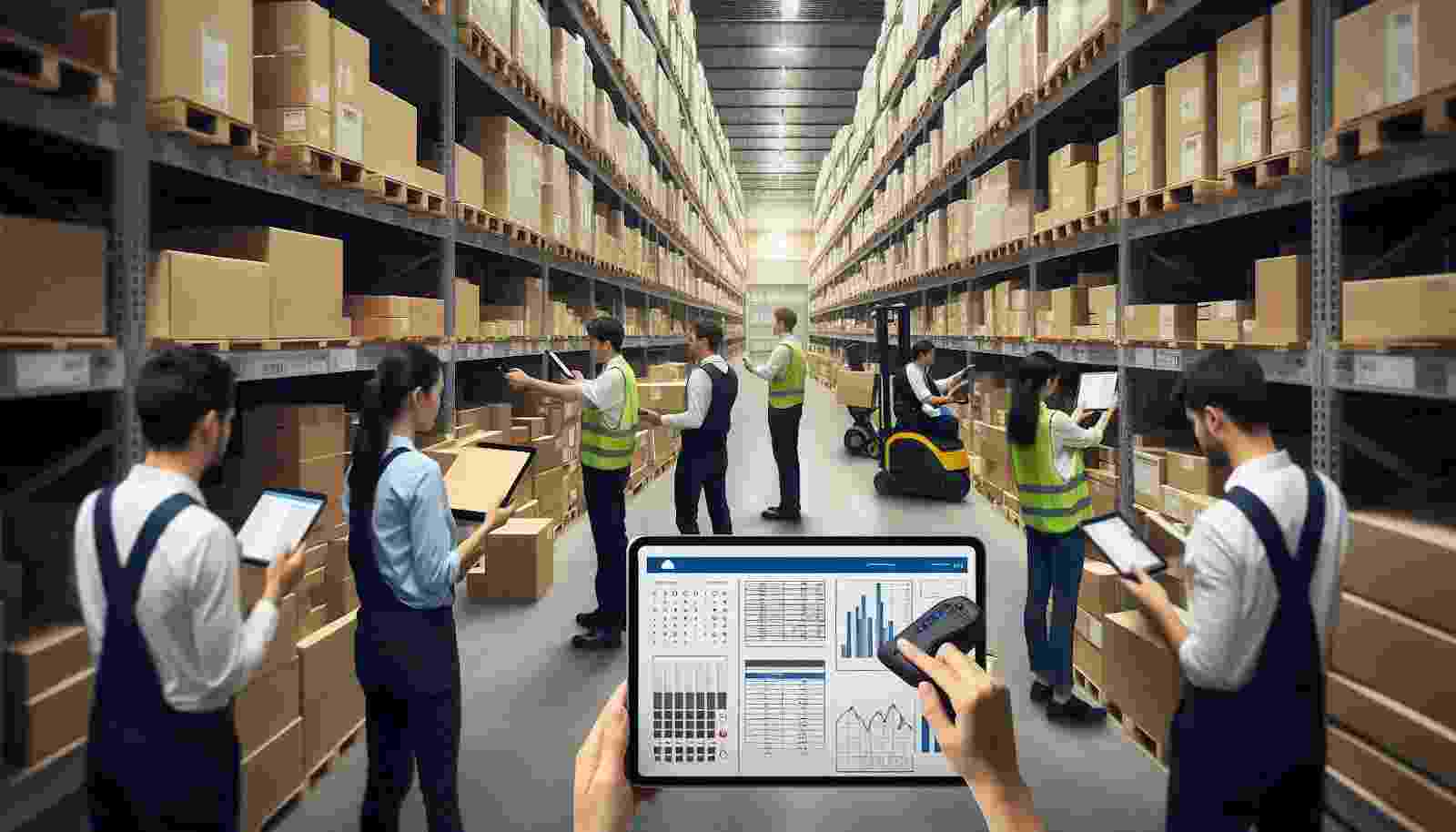
Functions of Inventory Management Hello! Suppose your company is involved in retail or manufacturing. In that case, the way you manage your inventory is very important. Oddly enough, the way you manage that physical stuff sitting around can make or break your business. This is not a joke; for most retailers, inventory serves as the single-largest investment on the balance sheet and is key to keeping the business running. Businesses must not get too focused and lose sight of the importance of inventory management.
Purpose of Inventory Management Why is adequate inventory management vital? Because it is often counted on for profitability and even viability. This is especially true in the case of retail and manufacturing businesses.
The reason is straightforward. A company cannot satisfy customer needs and wants if it does not have sufficient goods at the right time. Moreover, a company cannot be sufficiently cost-effective and yet be sufficiently responsive to customers if it doesn't have what it needs, when it needs it, and in the right amount.
Truly, inventory expenses are a significant aspect of the overall costs faced by businesses—often rivaling labor costs themselves. This is primarily because businesses tend to purchase more inventory than they can sell quickly.
Keeping Stock Just Right Having too much inventory is not a good thing. It means that you have invested too much money in the products you have in stock. It means that when you do sell a product, a lot of the profit you make from it has already been put into the product. And too little inventory means that you've run out of stock, which frustrates customers and causes them to look elsewhere.
1. Always Being Ready for Customers Proper inventory management guarantees that the products your customers want are always available. Satisfaction with their shopping experience creates loyal customers.
2. Cutting Down on Storage Costs An effective inventory system can help cut the significant price of storing and handling the inventory; in other words, it saves you big money.
You may not realize it, but the out-of-pocket costs of these two subcategories of P&L are huge! Efficient inventory management will alleviate that by reducing the actual spending on these costs.
3. Improving Cash Flow Effectively managing inventory allows you to redirect the cash that could be locked up in it so that you can use that capital for whatever is most important to your business.
4. Smoother Operations Having good inventory control lets you avoid many business problems. It is basic common sense that if you better manage your inventory, you prevent operational deck shuffling. Once you get a handle on the inventory management challenges that are most common, you can build up from that foundation.
Speaking of inventory management, you might also be interested in our other blog that discusses the Best Small Manufacturing Business Ideas in India
Functions of Inventory Management Now, let's talk about the various functions of inventory management. These are the key activities that help keep your inventory in check:
1. Inventory Planning and Forecasting Forecasting demand is the name of the game here. You try to figure out how much of something you're going to need in the future. With something like a grocery store, you can't not have any apples in stock. But if you have too many, then what happens? They're going to go bad, and the grocery store is going to lose money. So, try to avoid overstocking and, at the same time, try not to have too much stuff in the store, because then it leads to spoilage.
2. Inventory Control and Tracking It is absolutely necessary to be aware of the levels of one's inventory. Present-day technology, for instance, barcodes and radio-frequency identification, allows for much easier and more accurate means of stock-taking and for much better ways of discovering if what the records say one has is really what is there in the storeroom or warehouse.
3. Order Management This requires keeping stock levels high enough for potential sales and managing relationships with suppliers lucratively. Having strong relationships with suppliers would ensure a system that easily fills your shelves (when you need it filled), volume-adjusted to buyer demand.
4. Storage and Warehousing Proper storage and warehousing - how they are performed will ensure the quality is maintained as well access. This is all related to the efficient organisation of your warehouse and reduction in handling costs.
5. Inventory Valuation You need to know how much your inventory is worth for financial reporting and taxes. FIFO (First-In-First-Out) , LIFO (Last-In-First-Out) and Weighted Average Cost are some of the methods that can be used.
6. Inventory Auditing Audits audit documenting to guarantee precision of the stock. They may find missing or damaged parts - and verify that your very own inventory management is working just fine.
7. Supply Chain Coordination Good Inventory Management: It is one of the vital steps in a supply chain. This includes working with suppliers, manufacturers and distributors to deliver products on time from production right up until the customer.
8. Returns Management You also need to ensure that you will be able to deal with returns in an efficient manner. This includes everything from handling returned goods, reverse logistics to restocking or disposing of items as required.
9. Demand Planning Demand planning is the process of predicting customer demand to optimize inventory in line with market needs as a way for all levels within an organization. It Predicts Accurate Future Demand, data suction and market insights help it to predict future demand accurately.
10. Quality Control Ensuring your inventory meets quality standards is vital for customer satisfaction and compliance. Quality control measures help inspect and monitor products before they reach customers.
Role of Inventory Management Inventory management isn’t just about keeping track of stock. It plays several important roles in your business:
1. Elevating Customer Satisfaction Creating great businesses isn't easy. Consistently delivering what your customers want—especially in a place like India, where they dream super-big (and always compare you to their last great experience)—is something a whole lot of companies have tried and failed to do. Yet, somehow, a handful of companies are pulling it off.
2. Cutting Costs Efficiently managing inventory can have a big effect on cost reduction. In India's cutthroat business environment, where each rupee is hard-earned, getting your stock to its optimum level can make a significant dent in the expenditure column.
3. Boosting Cash Flow An inventory system that runs smoothly has the effect of not having significant amounts of cash locked up in stock. When business functions in this way, the cash that would be tied up in inventory instead can be used to cash in on investment opportunities or the acquisition of more goods.
4. Empowering Strategic Decision-Making To make smart business choices, firms need reliable info about their goods throughout the supply chain and usually about what's coming next. Get the data right, and your decisions ought to be right too. And they are strategic for the long term.
5. Streamlining Supply Chain Efficiency A strong inventory management system guarantees that products move easily from suppliers to customers, with few if any stops and delays. If you have a less than perfect supply chain, such a system is going to expose that. It will pinpoint the exact places where products aren't flowing like they should.
6. Enhancing Operational Efficiency Inventory management that is effective reduces the time and effort that it takes to track stock. Such gains are visible; they can be seen right away. These valuable gains of increased productivity are ones that benefit everyone in the business, but most notably, they make operations more efficient.
Factors Affecting Inventory Management Several factors can impact how well you manage your inventory. Here are some key ones:
1. Market Demand Change in market demand and the desires of the purchasers can have a mammoth impact on the amounts and types of inventory.
What could, at first glance, appear to be a slight shift can create an overflowing stock of an unpopular item and a complete and utter lack of necessary stock elsewhere. If customer preferences and buying patterns change at all, the result can be serious difficulties for a company already hard-pressed to cover costs and remain solvent.
2. Supplier Reliability The reliability of your suppliers is crucial. Delivery or consistency in supply can disrupt inventory levels and affect your ability to meet customer demand.
3. Economic Conditions The costs and availability of inventory can be affected by inflation, interest rates, and exchange rates. Being aware of economic trends allows you to adjust your inventory plans to better deal with these influences.
4. Technological Advancements Inventory management has seen a drastic change thanks to technology and its advancements. Although businesses have been using different types of technologies for a long time, those days have transformed into the current tech age and are now using very sophisticated and smart systems. These are designed to be more precise, quicker, and with the vision of having near-zero errors.
5. Regulatory Compliance Compliance with quality standards and safety regulations affects inventory management practices. Ensuring you meet these requirements helps avoid legal issues and maintain customer trust.
6. Seasonal Variations The upswings and downswings of customer demand during different times of the year mean that inventory levels also experience highs and lows. If you aren't prepared for peak times, you may not have the stock you need, in the quantities you need, to keep customers happy and fulfilled.
7. Inventory Turnover Rates
The rate at which inventory is sold and replaced indicates inventory management efficiency. High turnover rates suggest efficient management, while low rates may indicate overstocking or slow-moving products.
8. Storage Capacity Limited storage capacity can constrain inventory levels, leading to stockouts or increased holding costs. Optimizing storage solutions and expanding capacity if necessary is important.
9. Product Life Cycle Inventory management strategies change depending on the life cycle stage that a product is in. When a product is first introduced, companies often need to keep relatively high levels of it in stock.
By the end of the life cycle, the company has far better data about what the product's actual demand is, and can stock only as needed. In between those stages, stockouts are possible but more controlled.
10. Supply Chain Disruptions Inventory levels can be impacted by events that were not anticipated, such as the occurrence of natural disasters or when political situations become unstable. The developers of contingencies work to ensure that disruptions from such events do not mean a total halt to operations.
Conclusion To conclude, inventory management's functions are many and crucial to every company working with physical products.
The reason is simple—as a business grows, becomes more complex, and scales up, so too does its inventory. Businesses must generate huge amounts of cash to pay for and maintain inventory, which makes it vulnerable to many types of threats.
By the same token, inventory has become vital to many businesses and plays several important roles. The right amount of inventory can help keep costs low, customer satisfaction high, and working capital from being wasted in a static or dynamic manner.
One way businesses of all sizes can cope with the threats and vital functions of inventory is with robust inventory management systems.
For more, Optimize your retail operations and inventory management with our Free Billing Software for Retail Shop !
FAQs 1. Why is inventory management important? Your inventory is what makes or breaks your retail operation. It can be the divide between an efficient, smooth-running business with satisfied customers -- and one that lets its clientele down continually by falling back onto out-of-stock status (everywhere from a few items all the way to zero-to-all) time after time again.
2. What are the key functions of inventory management? These functions comprise planning, forecasting, tracking and controlling, order management (including picking/packing/shipping), storage/valuation manners for all inventory goods in the supply chain, efficient auditing, coordinating machinery, handling returns, demand and trading accounts, and quality syndromes.
3. How does inventory management help cash flow? Well-managed inventory changes the cash flow of a company. Having the right stock at a bare minimum level is crucial because too much inventory investment indicates poor utilization of working capital.
4. What factors impact inventory management? Factors include market demand, supplier reliability, economic conditions, technology, regulations, seasonal changes, turnover rates, storage space, product lifecycle, and supply chain disruptions.
5. How can technology improve inventory management? Businesses can rely on the pristine condition of their inventory and always have done. But, barcodes and radio frequency identification (RFID) technology have helped to make it faster, accurate as never before. Today, using real-time data makes systems smarter and more error-free.
Swipe offers state-of-the-art inventory management solutions and yes, you can completely transform your business with it. Effortlessly streamline operations to reduce cost and drive a better customer experience. Optimize your inventory and earn more! Visit Swipe today and see how our advanced digital tools will transform your business.
People Also Ask 1. What are the 5 stages of the inventory management process? The five stages are purchasing, storing, using, tracking, and reordering .
2. What is the 80/20 rule for inventory? The 80/20 rule means that 80% of a company’s sales come from 20% of its inventory items , helping focus on high-value products.
3. What are the three basic types of inventory? The three basic types are raw materials, work-in-progress (WIP), and finished goods .
4. What are the 5 pillars of supply chain? The five pillars are planning, sourcing, making, delivering, and returning .
5. What are the two-two kinds of inventory? Commonly, inventories are classified as dependent and independent demand inventory , or as perishable and non-perishable inventory .
.png)
-compressed.jpg)
.jpg)


.png)
.png)
.png)
.png)