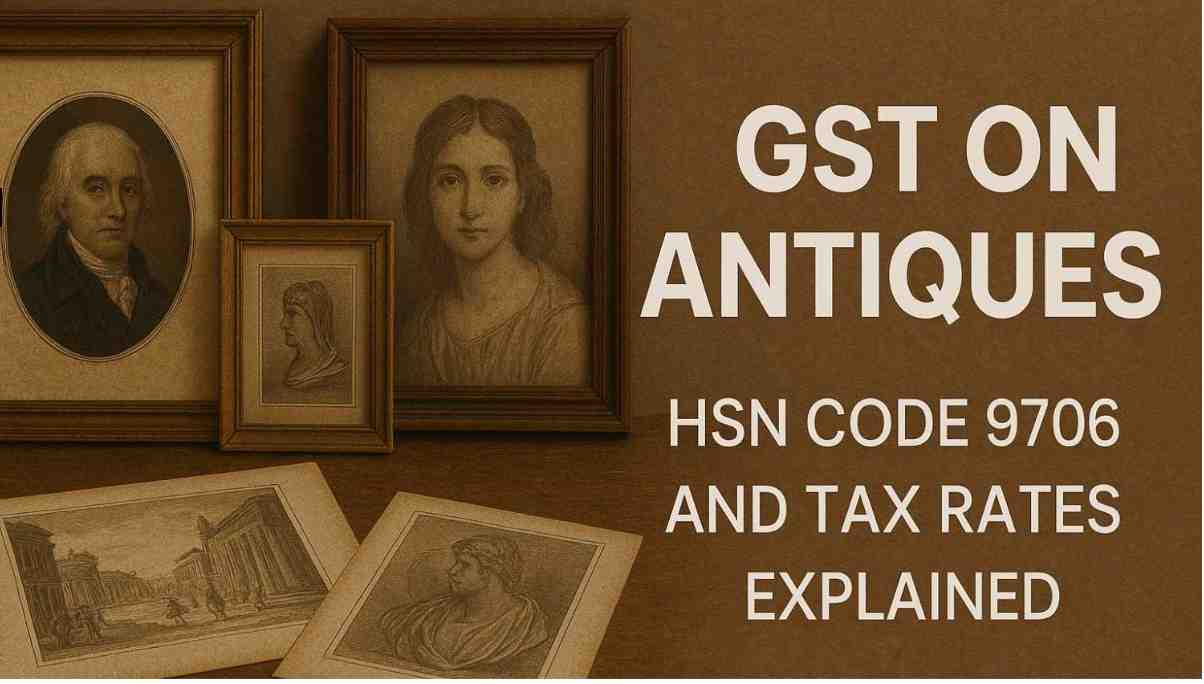
GST on Antiques: HSN Code 9706 and Tax Rates Explained GST acts as a structured system that simplifies indirect taxation for multiple goods and services throughout India. The GST application process for antiques presents specific complexities to determine. Any person involved with antique items must understand how GST tax regulations affect these historical objects. This blog provides extensive details about HSN Code 9706 , together with GST tax rates and compliance requirements for antiques during the GST era.
What Are Antiques? The definition of an antique relates to valuable vintage pieces consisting of domestic items or artistic creations, alongside intricate handiwork examples and historical items.
“Any product that reaches 100 years of age becomes valuable because it has traditional, artistic, or cultural heritage or aesthetic appeal.”
Common examples of antiques include:
Old paintings and sculptures
Vintage furniture and clocks
Ancient coins and manuscripts
Ceramics, carvings, and old textile materials
Detailed HSN Code Classification Table – Chapter 97 HSN Code Description GST Rate Key Notes 9701 Paintings, drawings, and pastels, executed entirely by hand 12% Includes artworks done manually (excluding hand-painted manufactured articles) 9702 Original engravings, prints, and lithographs 12% Artistic prints and engraved illustrations 9703 Original sculptures and statuary, in any material 12% Includes all hand-made sculptures regardless of material 9704 Postage or revenue stamps, stamp-postmarks, first-day covers, etc. 12% Must be unused or used and have a philatelic (collector's) value 9705 Collections and collectors' pieces of zoological, botanical, mineralogical, anatomical, historical, and archaeological interest 12% Includes taxidermy items, fossils, ancient tools, etc. 9706 Antiques of an age exceeding one hundred years 12% Strictly for items older than 100 years with proven historical or artistic value
Explanation of Key Codes:
9701 – Original Paintings and Drawings
Hand-created artworks (on canvas, paper, etc.)
Excludes manufactured or digitally printed art
9702 – Engravings and Lithographs
Limited-edition prints made using traditional methods like woodcuts or etching
9703 – Sculptures and Statuary
Applicable to statues made of marble, wood, bronze, etc.
Must be artist originals or limited editions
9704 – Philatelic Items
Only valuable as collectibles
Normal postage stamps are not covered
9705 – Collectors’ Pieces
Covers natural history items and curated collections (like coins, fossils, manuscripts)
9706 – Antiques
The item must be over 100 years old
Common examples: Antique furniture, clocks, vases, old jewellery, ancient instruments
Authentication or certification is often required
GST Rates on Antiques (HSN 9706) Antiques classified under HSN 9706 come under the following GST rate system per the GST Council’s Notifications and Rate Schedules:
Example:
A dealer sells an antique statue (over 100 years old) for ₹5,00,000:
CGST @ 6% = ₹30,000
SGST @ 6% = ₹30,000Total GST = ₹60,000
Or, if it's an interstate sale:
IGST @ 12% = ₹60,000
Also get to know about Paintings and drawings HSN Code & GST Rate - 9701
When Is GST Applicable on Antiques? Not all antique sales are taxable. GST applicability depends on the nature of the transaction and the status of the seller:
GST is applicable when:
Antiques are sold by a registered dealer.
The value exceeds the exemption threshold limit (currently ₹20 lakh in most states; ₹10 lakh in special category states).
Online sales or auctions are conducted through registered platforms.
GST is NOT applicable when:
An individual sells a personal antique item occasionally (not in the course of business).
The seller is an unregistered person , and the sale is not through a registered e-commerce operator.
The transaction is gifted, inherited , or donated (non-commercial transfers).
GST Implications for Different Stakeholders 1. Antique Dealers Dealers engaged in the regular sale of antiques must:
Register under GST if turnover exceeds the threshold.
Collect 12% GST on every taxable sale.
File periodic GST returns (GSTR-1, GSTR-3B, etc.).
They can also claim Input Tax Credit (ITC) on GST paid for:
Auction house commissions
Restoration/repair services
Transportation and insurance
2. Collectors or Individuals Private collectors who occasionally sell antiques may not fall under GST unless:
Their sales are frequent and business-like
The total turnover crosses the exemption threshold
Even if not liable to pay GST, it is prudent to document:
Age and authenticity proofs
Bill of sale and buyer details
3. E-Commerce Platforms and Auction Houses Online marketplaces and art auction platforms are required to:
Collect tax at source (TCS) under GST
Ensure that registered sellers charge the correct GST rate
File GSTR-8 (for TCS) and maintain proper audit trails
GST Registration Requirements If you’re in the business of selling antiques (as a gallery, dealer, or professional seller), GST registration is mandatory once you exceed the following annual turnover limits:
Region Threshold Limit for GST Registration Normal Category States ₹20 lakh Special Category States ₹10 lakh
Registration must be done via the official GST portal https://www.gst.gov.in.
Documentation and Proof of Antiquity Since antiques are taxed based on their age and status, documentation is crucial for both GST and legal compliance:
Important documents include:
Certificate of Authenticity or provenance (age proof)
Invoice with HSN code 9706
Photographs and appraisal reports
Sale agreement or bill of sale
If you import or export antiques, additional documentation and clearances from the Archaeological Survey of India (ASI) and the Ministry of Culture may be required.
How to Raise a GST Invoice for Antiques An antique seller must issue a tax invoice that contains:
GSTIN of the seller and the buyer
HSN code: 9706
Description of item
Date of invoice
Taxable value
CGST/SGST or IGST rates and amount
Example:
Description HSN Code Value (₹) CGST 6% SGST 6% Total (₹) Antique Vase 9706 1,00,000 6,000 6,000 1,12,000
Input Tax Credit (ITC) on Antiques Registered antique dealers can claim ITC on GST paid on:
Purchase of antiques (if bought from another registered person)
Expenses like rent, restoration, logistics, auction services, etc.
However:
No ITC is allowed if antiques are bought from an unregistered dealer .
ITC cannot be claimed on blocked credits such as personal expenses.
Legal and Compliance Considerations Dealing in antiques comes with regulatory responsibilities beyond GST:
Compliance Checklist: Ensure proper classification under HSN 9706
Maintain proof of age and authenticity
Register with GSTN if the threshold is crossed
File GST returns timely
Adhere to prohibited export guidelines
Follow e-way bill norms for interstate transfers (value > ₹50,000)
Impact of GST on the Antique Market Since the introduction of GST:
Tax ambiguity has reduced , benefiting registered dealers
Buyers now face standardized pricing
Input credits help genuine businesses lower their cost
Unregistered sellers have become less competitive
Online antique sales have become more compliant through platforms
However, challenges remain in:
Verifying the authenticity and age of items
Complying with cultural export restrictions
Navigating complex documentation
Conclusion Through the HSN Code 9706 GST system, India attempts to establish formal processes for the art and heritage market, which comprises the niche sector of antiques. The antique market enables transparent operations when sellers and collectors follow a 12% GST rate and maintain structured invoicing and compliance practices.
People who deal with antiques, as well as antique collectors, need to grasp GST rules to have straightforward deals and fewer tax-related hurdles during inspections.
Also, read about GST Rates and HSN Code for Wooden Frames
FAQs 1. Is GST applicable on inherited antiques? No, if antiques are inherited and not sold, GST is not applicable. GST is only levied on the supply (sale) of goods .
2. Can a private individual sell an antique without charging GST? Yes, if the person is not registered under GST and the sale is occasional. However, documentation should be maintained.
3. What is the GST rate on imported antiques? 12% IGST is applicable on imports under HSN code 9706.
4. Can I claim ITC on antique purchases? Yes, if you are a registered dealer and purchase from a registered seller , ITC is allowed.
5. Are all old items antiques under GST? No, only items that are over 100 years old and hold historical or cultural significance qualify as antiques under HSN 9706.
.png)
-compressed.jpg)
.jpg)


.png)
.png)
.png)
.png)