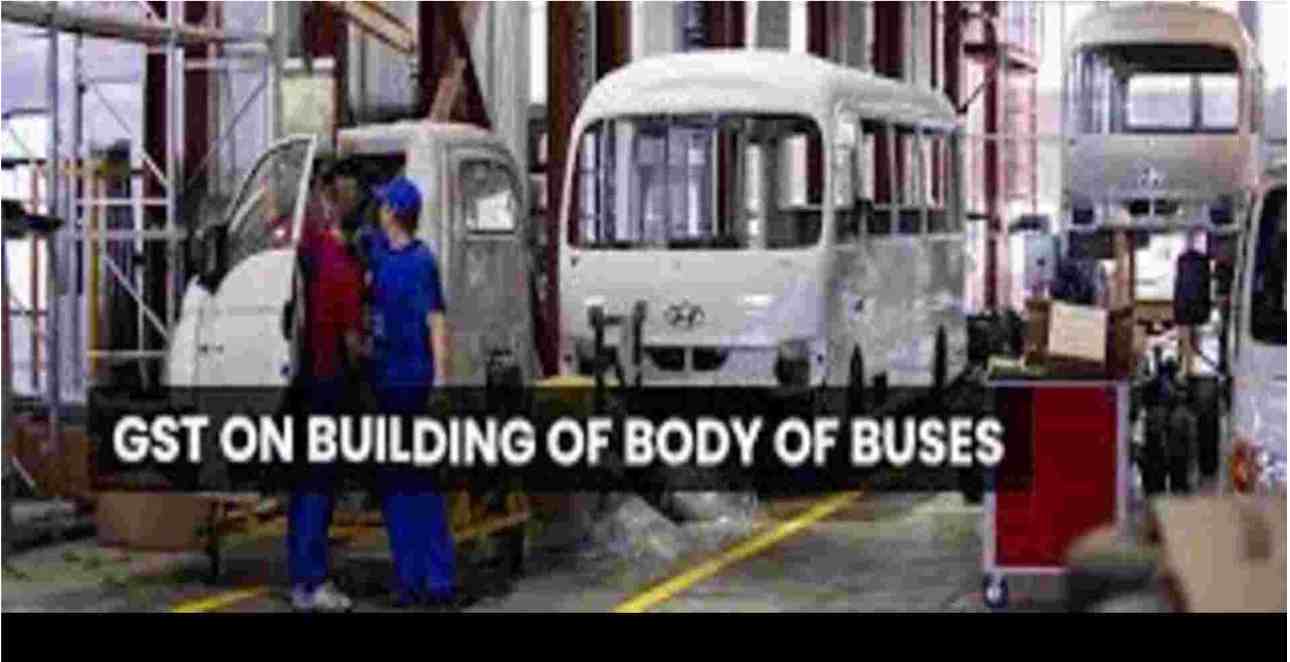
GST on Bus Body Building & Tyre Retreading for SMBs SMEs participating in bus manufacturing and recapping tires are important parts of India's transport and logistics ecosystem. However, the requirement for GST compliance within these industries can confuse people—particularly concerning how to apply the proper GST rate, HSN code, and input tax credit (ITC), as well as whether the business qualifies as a job or manufacturing. GST on Bus Body Building Services Nature of Activity The process of creating the body of a bus is known as bus body manufacturing. This usually includes building the body of a bus onto a chassis given by the client or owned by the manufacturer.
GST Classification The act of manufacturing the chassis is classified as a production service by the client, and the body of the bus as merchandise if the manufacturer provides both the chassis and the body to the customer.
HSN / SAC Code Manufacturing services on goods that are owned by others (HSN 9988 ).
GST Rate on Bus Body Building Particulars GST Rate Bus body building on customer-owned chassis 18% Sale of fully built bus (body + chassis) 28%
GST on Tyre Retreading Services Activity Type Retreading of tyres is the renewing of worn and/or damaged tyres with new rubber tread using specialised products, techniques, equipment and trained personnel. Tyre retreading extends tyre life and is an important cost saving measure for transport operators, fleet owners and logistics companies.
GST Classification Retreading of tyres is classified under GST law as:
Jobwork / a repair service
Repair and maintenance service, as the tyre remains the property of the customer and only the retreading process is performed.
This activity does not constitute the manufacturing of a new product; the same tyre retains its identity.
SAC Code 9987 - Maintenance, Repair & Installation Services.
This SUS-COV code covers all activities related to the repair, reconditioning and retreading of tyres used on motor vehicles and in commercial transportation.
GST Rate on Tyre Retreading Particulars GST Rate Tyre retreading service 18%
Refer here: Tyre Cord Fabric- GST Rates and HSN Code 5902
Input Tax Credit (ITC) for SMBs SMEs involved in building bus bodies as well as retreading tyres are allowed to claim ITC on their GST payments for inputs and services used in their business as long as they meet all of the criteria needed to claim ITC under the GST Act.
The following items qualify for ITC: Raw materials (such as steel, rubber, adhesives, paint, welding rods and tread rubber), consumables (lubricants/chemicals/bolts/nuts/safety materials), machinery/tools (fabrication equipment/retreading machines/compressors/workshop equipment), electricity and any other taxable services (machinery repairs/transport services/professional fees/rent for commercial premises). In order to qualify for ITC, the business must have proper tax invoices, have received the goods/services, and timely file its returns.
Major Restrictions on ITC eligibility: Taxpayers using the composition scheme cannot claim ITC; composition taxpayers cannot collect tax or claim an Input Tax Credit.
No Input Tax Credit can be claimed for goods/services used by a taxpayer for personal living purposes or non-business purposes.
If a taxpayer's supplier has not filed their GST return or paid GST to the Canadian Government, the taxpayer cannot claim Input Tax Credit on those goods/services.
Taxpayers that do not pay their suppliers on time must reverse any Input Tax Credit claimed.
Job Work vs Manufacturing – Why It Matters Criteria Job work Manufacturing Ownership of goods Customer Business GST Rate 18% Up to 20% ITC Eligibility Yes Yes Compliance Burden Lower Higher Nature of supply Service Goods Invoice classification SAC - Based invoice HSN - based invoice Working capital impact Lower (no GST on goods values) Higher (GST on full value)
GST Compliance Tips for SMBs Make sure to use "job work" or "service" on your invoices so that there is no confusion over how to classify these services when you calculate and charge for them on your sales.
Use the correct SAC codes or HSN codes based on the nature of your supply, so there are no mismatches when you file your GST returns.
Keep complete records of any customer-owned inputs that you handle in the form of delivery challans, invoices or agreements.
Make sure you file your GSTR-1 and GSTR-3B on time and correctly, so you don't incur any late fees, interest or mismatches with your ITC due to errors.
Do not use the composition scheme if your ITC represents a significant portion of your cost, as it will not allow you to receive any ITC credits under that scheme.
Keep your accounts reconciled to GSTR-2B , so you only claim ITC for eligible purchases.
Ensure that you only do business with suppliers who upload their invoices correctly, as that directly affects how much ITC you can claim.
Common Mistakes to Avoid Imposing 28% GST on Job Work Services Many Bus Body Builders mistakenly charge 28% GST for their job work services when they receive the chassis from the customer. Generally, the applicable GST rate for job work services is 18%. Charging a higher GST rate will decrease your competitiveness.
Incorrect Tax Classification of Tyre Retreading Tyre Retreading is often incorrectly classified as a supply of goods for GST purposes. Rather, it should be classified as either a repair service or a job work effort under the provisions of GST. Taxing it as goods will lead to incorrect application of GST rates and compliance problems.
Using Vague/Incorrect Descriptions on Invoices Using vague/ambiguous language in description for bus sale and tyre supply on invoices creates conflict during audit procedures and may result in an investigation/penalty.
Not Documenting Purchases and Tax Invoices with Proper Documentation If the taxpayer does not keep proper documentation regarding the purchases and usage of input, this will affect the input tax credit and increase the amount of tax due.
Conclusion For small and medium enterprises (SMEs), knowing about Goods and Services Tax (GST) on bus body building and tyre retreading can save very large tax costs and compliance risk associated with both activities being charged as services are otherwise 18% GST if incorrectly classified, and will end up in higher GST liabilities. To maintain good operational practices, stay informed on GST clarifications and keep good up-to-date records.
Suggested Read: Tyre Cord Fabric - GST Rates and HSN Code 5902
FAQs What is GST on bus body building activity? If you build a bus body on an existing customer's chassis then your business is providing a manufacturing service and as a result, the applicable rate of GST is 18%.
Is Tyre Retreading regarded as Job Work? Tyre retreading is a repair/job work service and attracts an 18% GST.
Can SMEs Claim Input Tax Credit (ITC) for Tyre Retreading Materials? Yes businesses can claim ITC on what they paid in taxes and on the materials and inputs used for what they do; however ITC will be limited based on the criteria outlined in GST Law.
Is a GST Registration Mandatory for Bus Body Builders? If the aggregate turnover of a BUSBODY Builder is more than the GST threshold or if the business is supplying goods and services between states, they must be registered with the GST authority.
Can Bus Body Builders Take Advantage of the Composition Scheme? Only if they register as a Camera Operator for GST, by registering under GST law they will not qualify for Input Tax Credit (ITC) therefore, for small business who build BUSBODIES and use heavy materials, this may not be an advantage when compared to other businesses that qualify for the composition scheme.
.png)
-compressed.jpg)
.jpg)


.png)
.png)
.png)
.png)