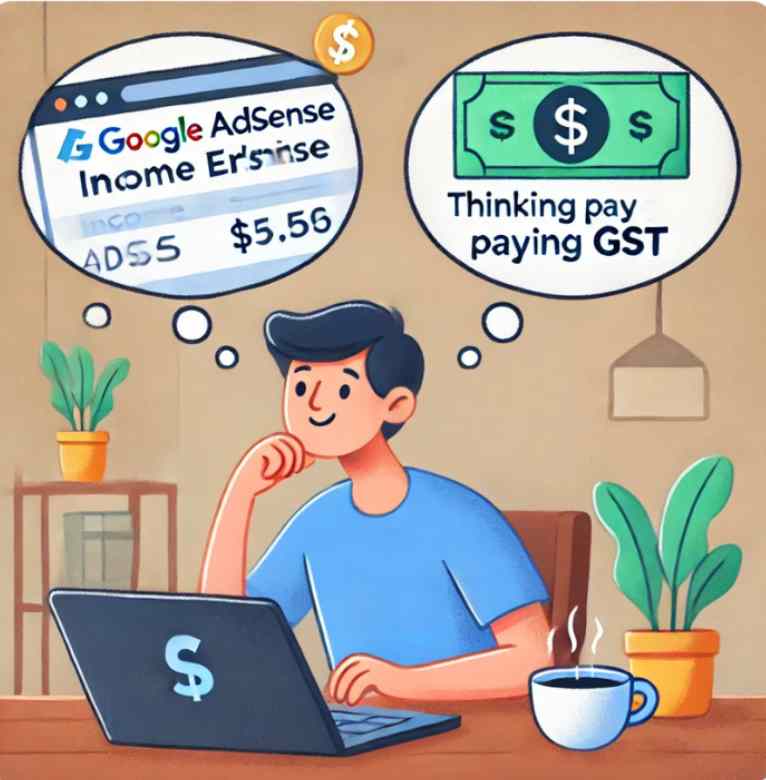
GST on Revenue from Google Adsense and Online Advertising- Advertising products and services are extremely important to sell anything. Over time, advertising has been developed, ranging from newspapers, magazines, and TV shows to websites, social media marketing, blogs, and digital platforms such as Google Adsense. Online advertising offers several intake options today, but understanding the tax benefits is equally important. Once you have these digital channels, GST can be applied to your income. Let's find out how GST affects Google AdSense and online ads. How GST Applies to Digital Advertising Revenue Digital advertising revenue, including earnings from platforms like Google AdSense, social media ads, and website monetization, is subject to GST (Goods and Services Tax) in India. Whether GST applies depends on factors such as the location of the advertiser (buyer of the ad space) and whether the service qualifies as an export of service.
1. GST on Domestic Digital Advertising Revenue When an Indian content creator (blogger, YouTuber, or website owner) earns revenue from Indian advertisers, the service is treated as a domestic supply, and GST is applicable at 18%.
If the content creator is registered under GST, they must collect and pay 18% GST on their revenue.
If they are not registered, GST may still be applicable once their total income crosses the ₹20 lakh threshold (₹10 lakh for special category states).
2. GST on International Digital Advertising Revenue (Export of Services) If a content creator earns revenue from foreign advertisers (i.e., companies based outside India), the transaction may qualify as an export of services under GST.
Exports of services are zero-rated under GST, meaning no tax is charged.
However, to claim the zero GST benefit, the creator must file a Letter of Undertaking (LUT) with the GST department. If LUT is not filed, GST at 18% must be paid first, which can later be refunded as an input tax credit.
Curious about the advantages and disadvantages of GST ? Stay informed and make better financial decisions!
Click Here
How Google AdSense Generates Income – Stepwise Explanation Google AdSense lets website owners, bloggers, and YouTubers display ads and monetize content. A step-by-step breakdown of functions.
Step 1:Google AdSense Registered content makers (bloggers, YouTubers, or website owners) create an account in Google AdSense.
Your website or YouTube channel must meet the requirements of the AdSense registration requirements.
Step 2 Google places the ads on the website/channel After approval, AdSense will provide a clear ad code that the creator places on his website. For
For YouTube channels, AdSense is automatically integrated into your YouTube financial settings.
Google's algorithms show relevant ads based on user interests, website content, and location.
Step 3: Pay Google to show ads to advertisers. Advertisers provide advertisers based on Google Display based on pay-per-click models (PPC) or pay-per-prescription (CPM)
Step 4: Website Owner or YouTuber Earns Revenue The content creator earns money when users:
Click on the ad (PPC - Pay Per Click)
View the ad ( CPM -
The amount earned varies based on factors like ad quality, location, and niche.
Step 5: Google Takes a Commission and Pays the Creator Google keeps a percentage (usually 32%) of the ad revenue as a commission.
The remaining amount is credited to the creator’s AdSense account.
Once the earnings cross $100 (USD), Google releases the payment through bank transfer.
Step 6: Tax and GST Considerations If the earnings exceed ₹20 lakh/year (₹10 lakh for special category states in India), GST registration is required.
Earnings from foreign advertisers may qualify as exports of services, requiring LUT filing to avoid GST payments.
GST Registration for Bloggers and Digital Marketers Who Needs to Register for GST? Bloggers, YouTubers and digital marketers must register with GST in India if they meet the following criteria:
Earn from Indian Advertisers - if revenues from Indian companies via Google Adsense are generated at 18%.
Income from Foreign Advertisers (Export of Services) - Income from foreign companies is entitled to export of services and will be released by GST if a LUT (Document Statement) is submitted.
Freelancers providing digital services - Those who write services such as SEO, writing content, or providing digital marketing must register if their profits exceed the GST threshold.
Threshold Limits for GST Registration ₹20 lakh per year – For most states in India.
₹10 lakh per year – For special category states (e.g., Northeast states, Uttarakhand, Himachal Pradesh).
Mandatory Registration – Regardless of income, registration is compulsory if the person provides services to clients outside India.
GST Exemptions and Benefits for Digital Content Creators 1. Conditions for GST Exemption Digital content creators, including bloggers, YouTubers, and freelancers, may be exempt from GST under the following conditions:
Income Below the Threshold Limit : If total earnings are below ₹20 lakh per year (₹10 lakh for special category states), GST registration is not mandatory.
Providing Services to Foreign Clients (Export of Services) : If a content creator earns revenue from foreign advertisers, clients, or companies, it may qualify as an export of services, which can be GST-free (see next section).
Using the Composition Scheme (Not for Services)
The Composition Scheme
However, it does not apply to online service providers like bloggers or digital marketers.
2. Export of Services and Zero-Rated Supplies What is an Export of Service? For income from foreign clients to be considered export of services (and be exempt from GST), it must meet these conditions:
Zero-Rated Supplies and GST Benefits Service exports are classified as a supply of zero. In other words, it is not subject to GST.
However, the creator must submit a letter of duty (LUT) to the GST department to avoid 18% GST paying in advance.
If LUT is not filed, GST must be paid first, which can later be claimed as a refund.
Conclusion While earning through Google AdSense and online ads can be a great source of income, it is important to understand the impact of GST. Whether you make money with Indian or foreign advertisers, knowing when and how GST applies can save you from unnecessary tax scope. If your revenue is below the threshold, you may not need to register, but if you exceed the limit, it is best to stay compliant. The most important snack? If you are keeping an eye on revenue streams, you should know your GST obligations and submit the necessary documents, especially if you are affiliated with international clients.
FAQ’s- 1. Do I need to pay GST on my AdSense income? If your total earnings exceed ₹20 lakh (or ₹10 lakh in special category states), you need to register for GST. If your revenue comes from Indian advertisers, 18% GST applies.
2. Can I avoid paying GST on income from foreign advertisers? Yes, if your income qualifies as an export of services, you can file an LUT (Letter of Undertaking) to avoid paying GST upfront.
3. What happens if I don’t register for GST but my income crosses the limit? If you exceed the threshold and don’t register, you could face penalties and interest on unpaid taxes. It’s best to register once you approach the limit.
4. Can bloggers and YouTubers use the Composition Scheme for GST? No, the Composition Scheme is generally not available for digital service providers like bloggers and YouTubers.
5. Do I need a GST number if I earn less than ₹20 lakh per year? No, GST registration is not mandatory if your total income is below ₹20 lakh (₹10 lakh for special category states). However, if you provide services outside India, registration might still be required.
.png)
-compressed.jpg)
.jpg)


.png)
.png)
.png)
.png)