GST recovery: Understanding the process and its benefits It is crucial for all registered businesses located in India to comply with the GST. When taxpayers do not pay what they owe for GST bills, interest and penalty amounts owing otherwise and/or make incorrect refunds claims, the authorities will begin a GST recovery process. It is therefore essential for businesses to understand how GST recovery processes work so that they do not encounter legal issues and maintain smooth business operations. What is GST recovery? The recovery of goods and services tax (GST) refers to the process used by tax authorities to obtain unpaid tax liabilities and other amounts owed by taxpayers under GST laws. The purpose of this process is to ensure that taxpayers fulfill their tax obligations within a certain period of time; thereby allowing the government to collect any overdue taxes owed from both businesses and/or individuals who do not comply with the GST within the specified time frame.
The recovery procedure begins when a taxpayer has not paid their dues as required (within the prescribed time limit) after receiving one or more of the following: notice of assessment, demands for payment, etc. Depending upon what type of failure has occurred, the authorities may use a number of different methods to recover the debt, such as adjusting against refunds, seizing or attaching bank accounts, detaining or holding goods, or recovering through sale of assets or property (liquidating the asset).
Legal provisions and situations leading to GST recovery The main law that controls the recovery of unpaid GST tax, interest due and penalty is contained in Section 79 of the CGST Act 2017. This section gives GST authorities the power to recover unpaid taxes, interest, penalties or any other amounts owed under GST law when taxpayers fail to pay bylaw within the time frame allowed.
GST authorities have many ways to recover due amounts as part of their recovery power, including:
Deducting amounts from refunds Seizing and selling or attaching bank accounts Collecting from third parties who owe the taxpayer money Storing and selling taxpayer's seized or attached property Seizing or attaching taxpayer's tangible and intangible property and using that property to pay what the taxpayer owes. Recovering GST may be necessary in many different situations, including:
Not paying GST Paying the wrong amount of GST Incorrectly claiming Input Tax Credit Over-claiming a refund Not paying interest and/or penalties on time Tax assessment, audit or investigation resulting in tax payable Committing fraud, or not declaring the entire amount of taxable turnover. In order to avoid a recovery action or any legal disputes with respect to GST compliance, businesses must continually monitor their compliance with GST and maintain appropriate documentation.
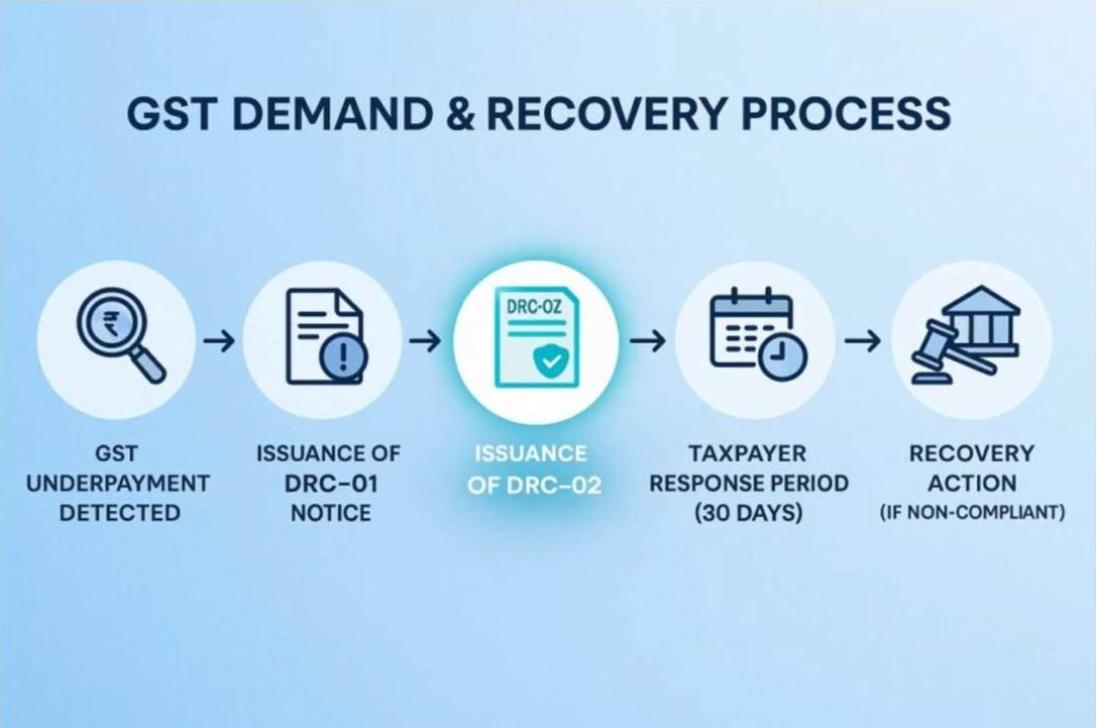
GST recovery process There is a generally accepted way of doing things regarding the recovery of the Goods and Services Tax (GST).
Issuing of notices The first step in recovering GST due is for the Department to issue a "Show Cause Notice " or "Demand Notice." This will detail the amount owed by the taxpayer.
Opportunity to respond The taxpayer will be given an opportunity to provide documentation in support of the dispute and/or make an explanation in response to the department's notice.
Issuing of a recovery order If the taxpayer does not respond positively, they will be issued with a "recovery order" by the tax authority.
Initiation of recovery proceedings If the taxpayer still does not pay the amount owed within the prescribed timeframe, then the tax authority will initiate recovery proceedings.
Methods of GST recovery Refund adjustment for tax deductions Taxpayers' pending GST liabilities may be deducted off any refunds they would otherwise receive. The department withholds and deducts any amounts owed against their outstanding liabilities, and then they will pay out whatever balance is left.
Recovering through bank accounts GST will issue a freeze or debit order against a taxpayer's financial institution to collect unpaid amounts owed. Banks must comply with GST collection orders and, as such, may not be able to release funds from taxpayer accounts.
Detained and auctioned goods Where a taxpayer has unpaid GST accounts, goods they own may be detained and/or seized, and/or confiscated. The authorities may decide to auction any goods they have detained to recover unpaid GST, in certain instances. The method of collection involves either noncompliance, unlawful transportation, or willfully avoiding remitting tax.
Recover from third parties If a company does not pay its taxes on time, the government can collect those taxes directly from people or companies that owe money to that business (such as customers, suppliers, or customers). Those people would have to remit whatever they were going to pay to the business directly to the government instead of sending it to the business.
Attachment and auction of property The government may attach all types and kinds of people or firms’ properties (new or used) for the purposes of recovery; including but not limited to: equipment or machinery used to manufacture goods; automobiles, trucks or other delivery vehicles of the business; improvements to real estate; office furniture, computers and software; land; and/or a building.
Common reasons behind GST recovery notices Due to erroneous, non-compliant, or mismatched transactions reported to them, the GST department often sends out a notice for recovery of GST to businesses. These are some of the most common reasons businesses receive a notice for recovery:
Mismatch in filing of GST returns like a mismatch between GSTR-1, GSTR-3B and GSTR-2B; Incorrectly claiming input tax credit (ITC), or claiming excess ITC; Late payments of GST payable; Non-filing, or late filing of GST returns; Errors in e-invoicing and e-way bill; Misclassification of goods/services by incorrectly applying HSN/SAC codes; Claiming ITC from non-compliant/fake suppliers; Underreporting of taxable turnover; Claiming/refunding incorrectly, or receiving excess refunds; Not responding to GST notices in the prescribed time. Regular reconciliation of GST filings, periodic compliance reviews, accurate record keeping, and timely payment of taxes can help significantly reduce a business' chance of receiving a notice for recovery of GST it has claimed. Businesses should also ensure their vendors are compliant to the GST, and carry out their own internal audits for GST, to identify and correct problems as soon as possible.
Best practices to avoid GST recovery proceedings Compliance Practice Benefit File GST returns on time Avoids penalties and notices Reconcile GST data regularly Reduces mismatches in returns Verify Input Tax Credit claims Prevents ITC reversal and recovery Maintain proper invoices and records Supports smooth GST audits Respond promptly to GST notices Helps avoid legal complications Conduct periodic GST compliance reviews Identifies errors at an early stage
Conclusion It is vital for businesses to have sufficient knowledge of the recovery of GST as it serves as a means by which governments ensure tax compliance and safeguard revenue collected. The recovery of GST, businesses must understand how to recover GST in order to reduce the risk of being penalized and contested by the government. In order for businesses to reduce their overall tax recovery risks, timely pay taxes, accurately submit their tax returns, and properly reconcile their tax records are three key components that will help achieve success with the recovery of GST.
Suggested Read: DRC in GST Full Form: Demand and Recovery Code in GST
FAQs How are unpaid tax obligations recovered? To recover unpaid amounts, GST will be considered one of the taxes owed to the tax authority.
Can GST authorities cause a bank account freeze? Yes. The GST and other governmental authorities may request that a bank freeze a taxpayer's bank account for their tax obligations.
What will happen if i do not pay my tax obligations under GST? If you do not pay your GST tax obligations, you will face late fees, penalties, confiscation of your property and other forms of recovery.
What section governs GST recovery provisions? Section 79 of the CGST act of 2017 covers most of the provisions for the recovery of goods and services tax (GST).
.png)
-compressed.jpg)
.jpg)


.png)
.png)
.png)
.png)