How to Calculate VAT in Oman: Step-by-Step Process, Formula & Example for 2025 Value Added Tax (VAT) is a type of consumption tax applied to the sale of goods and services. VAT was legislated in Oman on April 16, 2021, to help diversify Oman’s economy away from oil revenues and foster fiscal sustainability. As businesses come to terms with the VAT regime, each business will want to ensure the need to calculate VAT in Oman correctly so it stays out of trouble and can continue with its operations smoothly.
Overview of VAT in Oman In Oman, the standard VAT rate is 5%, which is relatively low by international standards. The 5% standard rate is applied to the majority of goods and services sold in the Sultanate (except zero-rated or exempt categories of supplies). Zero-rated supplies consist of items such as basic food items, medical treatment, and exports. Businesses with zero-rated supplies will have to register for VAT; however, they will be able to recover the input VAT that they incurred in making the zero-rated supplies.
Exempt supplies consist of items such as financial services, leases of residential real estate, and local public transport. Unlike zero-rated categories of supplies, businesses cannot recover input VAT in respect of exempt supplies.
It is essential to understand the difference between zero-rated and exempt supplies, as this will determine the VAT treatment when calculating and reporting VAT.
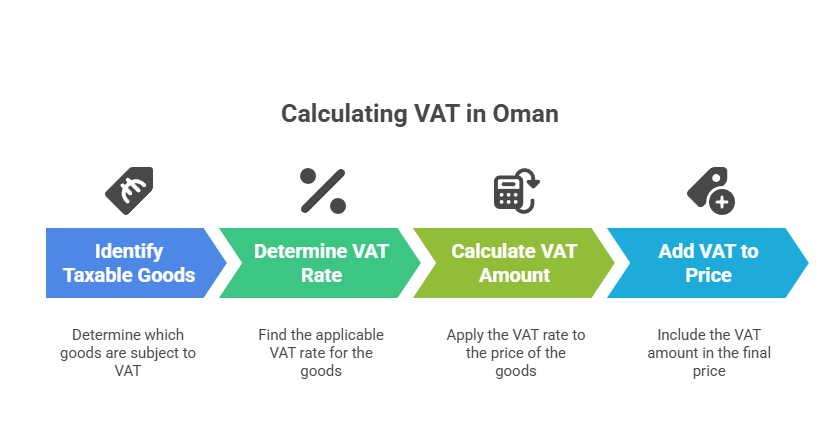
How to Calculate VAT in Oman: Step-by-Step Process 1. VAT Calculation Formula The VAT rate is 5%, which applies to most taxable transactions unless specified otherwise.
2. Example Calculation Let’s assume a business sells an electronic item for OMR 100.
This means the customer pays OMR 105, out of which OMR 5 is the VAT that the business must report and remit to the tax authorities.
You Can Also Read: How to Calculate VAT in UAE: Complete Guide for Businesses
3. Handling VAT on Sales and Purchases a. On Sales (Output VAT): Businesses must charge 5% VAT on taxable goods and services. The amount of VAT collected is known as Output VAT and is payable to the Oman Tax Authority
b. On Purchases (Input VAT): Businesses have also paid VAT on the purchase of goods and services for business purposes. They are charged Input VAT. The input VAT may be claimed as a credit against output VAT.
Example: A business sells goods worth OMR 500, collecting OMR 25 output VAT. The business has also paid OMR 10 input VAT on the raw materials they have purchased.
Net VAT Payable = Output VAT – Input VAT = 25 – 10 = OMR 15 Businesses will also be required to maintain records of input VAT and output VAT to complete tax returns accurately.
Common Mistakes to Watch Out For: Calculate VAT in Oman Most companies, particularly ones new to the VAT system, make common errors that can lead them into tax liabilities and compliance issues. Here are a few common traps to look out for:
1. Wrong VAT Classification: The main issue is applying VAT to exempt or zero-rated goods and either overcharging customers or overpaying tax.
2. Wrong VAT Rate: Not using the standard 5% VAT rate when it is required or failing to properly account for input tax for zero-rate items.
3. Incorrect calculation of VAT due when a discount is taken: VAT is due after the discount is deducted, not before.
4. Lack of documentation: Not keeping invoices and purchase orders, or even VAT return summaries, which can and will add complications to any audit and claim.
5. Missing the deadline to file and pay the return: The consequences of late filing and paying of VAT returns are penalties and interest.
Tip: Frequent staff education and making use of a versatile accounting software such as Swipe can help avoid most of these issues.
Importance of Accurate VAT Calculation in Oman Accurate VAT calculation is more than a matter of compliance. Mistakes can lead to:
1. Financial Penalties: Errors in VAT filing can attract fines, interest, or legal action.
2. Loss of Input Tax Credits: Incorrect classification or record keeping may prevent businesses from claiming input VAT.
3. Damaged Reputation: Frequent non-compliance can lead to loss of credibility with clients and partners.
4. Audit Risks: Inaccurate filings increase the chances of being audited, which consumes time and resources
5. Accurate VAT calculation ensures financial transparency, enhances operational efficiency, and builds trust with customers and authorities alike.
Also Read: Swipe is Now Live in Oman!
Conclusion Understanding and calculating VAT correctly is a vital part of doing business in Oman. With a standard rate of 5% and specific rules around exemptions and zero-rated supplies, businesses must stay vigilant and informed. From mastering the basic formula to avoiding common mistakes, each step contributes to seamless VAT compliance. Whether you're a small retailer or a large manufacturer, adopting best practices in VAT calculation will safeguard your business from penalties and promote long-term financial health.
FAQs 1. What is the current VAT rate in Oman? The standard VAT rate in Oman is 5%, applied to most goods and services sold within the country.
2. Which goods are exempt from VAT in Oman? Certain essential items such as financial services, residential rentals, and public transport are exempt from VAT in Oman.
3. How is VAT in Oman calculated on a sales invoice? VAT in Oman is calculated by multiplying the taxable amount by 5% and adding the result to the original price.
4. Are exports subject to VAT in Oman? No, exports are zero-rated under VAT in Oman, meaning VAT is charged at 0% and input tax can still be reclaimed.
5. What is the difference between zero-rated and exempt supplies under VAT in Oman? Zero-rated supplies allow VAT recovery on related purchases, while exempt supplies do not permit input VAT claims.
6. Who needs to register for VAT in Oman? Businesses with taxable supplies exceeding the mandatory registration threshold must register for VAT in Oman.
7. How should companies record purchases and sales under VAT in Oman? Companies must maintain detailed records of all VAT-charged sales and purchases, including proper tax invoices and credit notes.
8. Can small businesses claim input VAT in Oman? Yes, registered small businesses dealing in taxable or zero-rated supplies can claim input VAT in Oman.
9. What happens if VAT in Oman is calculated incorrectly? Incorrect VAT calculation in Oman may result in financial penalties, loss of input VAT credit, and possible legal action.
10. Do businesses need to submit VAT returns regularly in Oman? Yes, businesses must file VAT returns periodically in Oman, usually every quarter, based on their taxable activities.
.png)
-compressed.jpg)
.jpg)


.png)
.png)
.png)
.png)