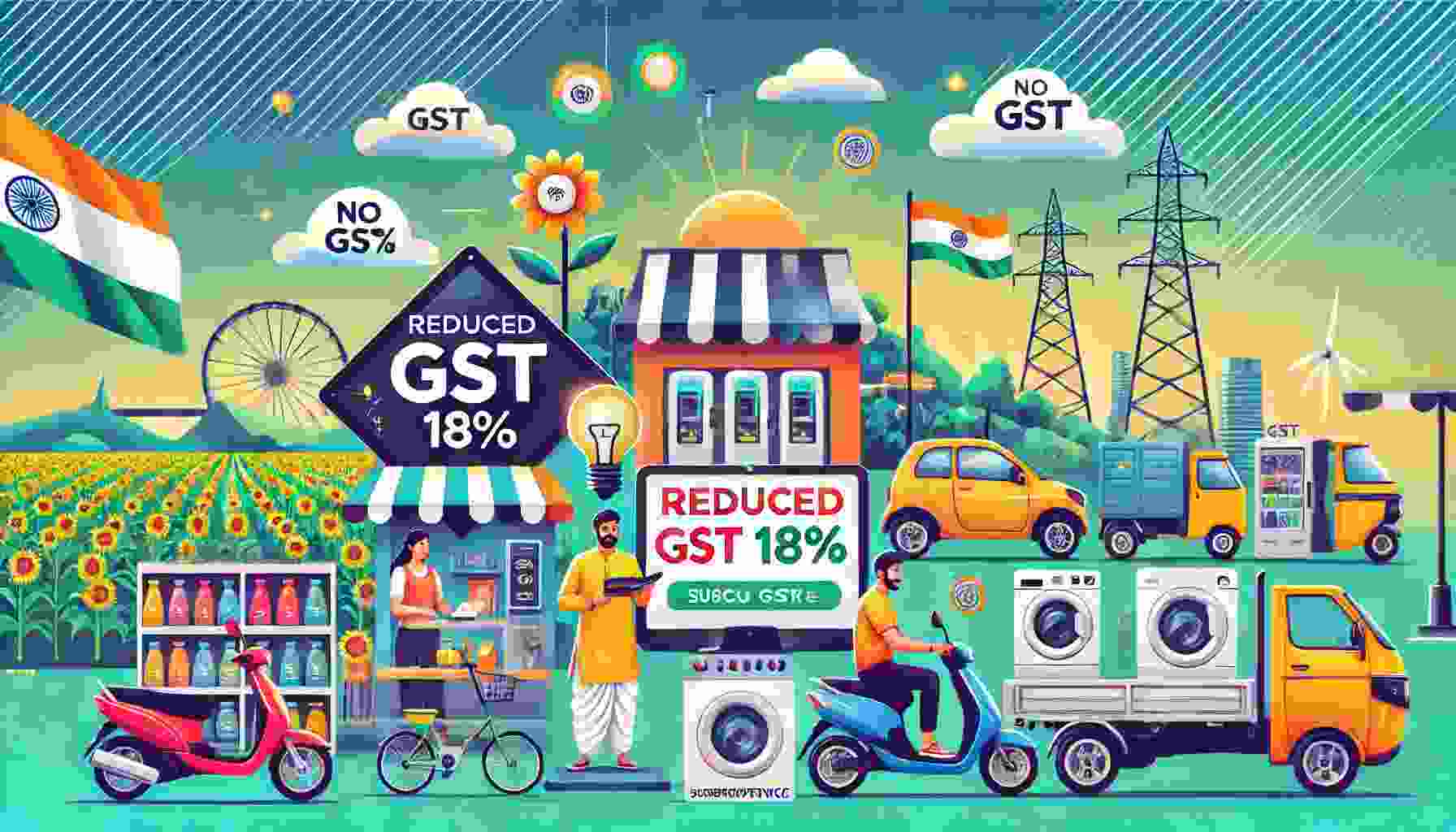
New Business Ideas Emerging After India’s Next-Gen GST Reforms The Next-Gen GST reform But the question is—what opportunities for new business can entrepreneurs and startups evolve out of this change? Let’s discuss.
1. Affordable Mobility Startups One of the biggest beneficiaries of the reform is the auto industry. By lowering taxes from 28% to 18% on small cars (under 1200cc) and two-wheelers appropriately, prices are set to drop considerably. Yes, you heard it right, and it's the reason why I don't see enough opportunities across the sector.
New Business Idea: Launch a car leasing and subscription service at a low price. The middle-class family will have access to cars with lower EMIs, which will create space for companies to create low-priced rentals and ownership categories.
Why Now? Lower upfront prices lead to enormous demand for taxi ride-sharing fleets, vehicles for last-mile deliveries, and even car subscription start-ups.
2. EV Charging and Maintenance Hubs The attractiveness of their low price is compounded by the fact that electric vehicles still enjoy 5% GST tax
New Business Idea: Create Electric Vehicle charging hubs, especially in Tier-2 and Tier-3 cities, or have a mobile EV repair operation.
Why Now? The rate at which EV adoption is accelerating means the demand of infrastructure around these vehicles will explode. Current entrepreneurs can take advantage of the tax incentives and government interest in electric vehicles by providing competitively priced maintenance programs, battery swaps, charging kiosks, etc.
3. Agri-Tech and Farm Equipment Rentals Removing GST from tractors and exempting farm inputs from 5% GST will lessen farmers' expenses. However, many small farmers do not have enough equity to outright purchase machinery.
New Business Idea: Create a platform that allows farmers to rent farm equipment — tractors, harvesters, irrigation equipment, for at least a 40% lower cost than outright purchase.
Why Now? With the rescinding of taxes for fleet operators, equipment is cheaper to acquire, so they can rent it out at a pay-per-use basis, and potentially bundle it with a digital booking app for added value.
4. Household Appliance Subscription Models Appliances such as TVs, ACs, and dishwashers are becoming affordable (now charged at GST of only 18% instead of 28% applicable to prior).
New business idea - Start “Appliances-as-a-Service” platforms - Subscription-based washing machines, ACs, and fridges for urban renters and hostels.
Why now? Our analysis shows that younger working professionals and students would prefer a flexible arrangement. Availability of more appliances at cheaper price points means that startups are able to purchase appliances in bulk and rent them out at attractive rates.
5. Rural Retail Chains and Kirana Tech With daily consumption needs (food items, bounds, medicines and insurance) with GST at 5%, our verdict is that rural consumption is set to grow.
New business idea: Open rural retail chain stores or partner with kirana stores using digital supply-chain platforms.
Why now? Low-priced consumption essentials will create a larger purchasing power in villages. A startup that closes the loop between manufacturers and kirana shops using digital platforms can capture this opportunity space.
6. Used Car & Bike Market Expansion With the prices of new cars declining, the supply of used cars will rise. Each buyer of a new car, while letting go of their old car to make room for the new one, creates an opportunity.
New Business Idea: Build a used car platform with AI-powered instant valuations, guaranteed resale, and upgrades.
Why Now? Entrepreneurs can leverage reduced vehicle costs due to GST and provide digital tools for vehicle financing, insurance and resale.
7. MSME Tech & SaaS Solutions For small businesses, GST simplification leads to fewer compliance burdens.
New Business Idea: Build SaaS (software as a service) based tools for GST filing, expense tracking, and inventory management
Why now? MSMEs in tier 2/3 cities will expand because of the simplified GST rules. They require affordable cloud-based tools to meet tax compliance and digital transformation.
8. Smart Packaging & GST Branding for FMCG New Trend Alert: FMCG companies are now relabeling product packs to reference post-GST price cuts. Brands will have "GST Advantage" stickers or a new ₹5 pack with the savings passed on.
Business Idea: A smart packaging and label service that supports new pricing regulations and creates awareness of GST benefits for MSME food/FMCG brands.
Why Now? Just like "No Onion, No Garlic" stickers lead to faster sales, "Price Reduction from GST" can act as a conversion metric. Design + supply chain + compliance = startup.
Conclusion India's Next-Gen GST reform is more than just delivering lower prices. It can rebuild industries: mobility start-ups, EV infrastructure
It is a great time for aspiring entrepreneurs to convert their ideas into businesses with consumers pushing on demand and a supportive tax environment.
FAQs Q1. Which sector will benefit the most from the new GST reforms? The automobile sector, farm equipment, and electronics are among the biggest consumer sectors.
Q2. How will the GST changes affect startups? Startups will benefit from lower costs, increased consumption, and easier tax compliance.
Q3. Is the EV industry still taxed at 5% after reforms? Personal mobility is still at 5% so still one of the best sectors for tax relief.
Q4. What opportunities exist for rural entrepreneurs? Farm equipment rental, rural retail chain, and digital kirana companies offer the strongest prospects.
Q5. How can MSMEs take advantage of reforms? Through the use of digital GST filing tools, expanding business due to lower costs, and access to new market sectors.
.png)
-compressed.jpg)
.jpg)


.png)
.png)
.png)
.png)