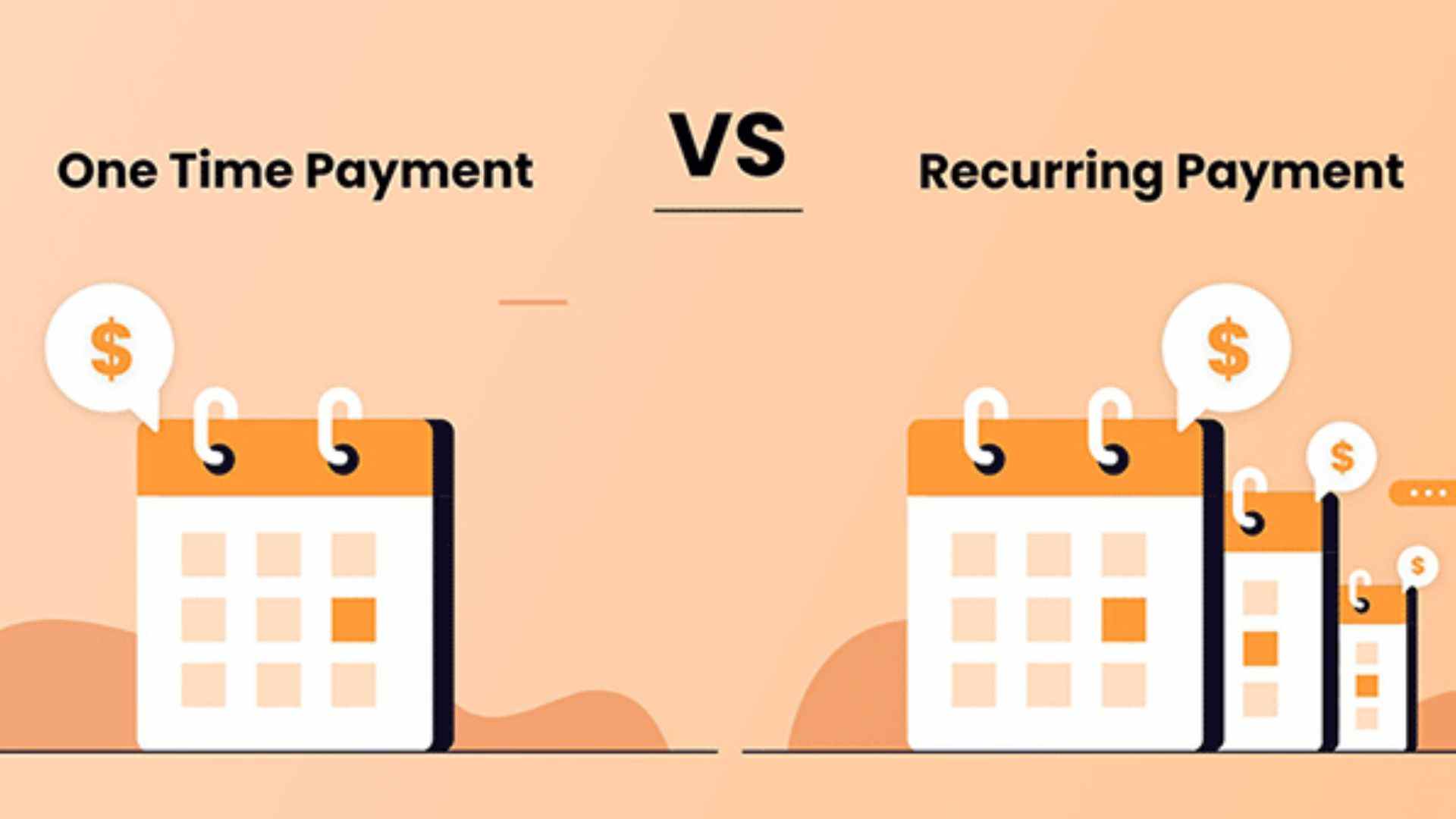
Recurring vs One-Time Billing: Which Model Fits Your Business? Payment options Billing is an important source of revenue for your company, but it may also impact how your customers view you, how often they continue to purchase from you, your company's cash flow and the overall effectiveness of your operations as a company; therefore, you should clearly understand the differences between one-time and recurring billing before deciding the type of billing that is the best choice for your unique business.
What Is Recurring Billing? Recurring billing is a method of payment whereby an individual customer is automatically Recurring billing refers to a system of charging a particular client's account (with their permission) at a preset rate and timeframe for the same service or product that they use or receive regularly. Some of the regular items that you can charge your clients regularly include: gym memberships, newspapers, magazines, lawn care companies, software, and various other services/products that will keep their clients/users/consumers satisfied with their continued business relationship over time.
Once a client approves a recurring billing arrangement, there will be an automatic charge made to their account by the provider for the duration of their membership or subscription, as long as the customer continues to make timely payments based on their confirmed schedule until either they choose to cancel their recurring billing or until the company decides to terminate the customer's subscription. Recurring billing can be beneficial for any organisation that has a need for steady recurring revenue and/or the ability to foster customer loyalty through creating enduring relationships with its clients via recurring billing methods.
What Is One-Time Billing? A single-time charge or payment is made by a person for a single product or service. As long as the customer has not cancelled or stopped using the service, he/she is not charged again for any future services purchased in that same transaction. This is the most popular and common billing method in retail, consulting, project-based service companies, and most business-to-business
The one-time payment model is simple. The customer receives a product; the customer's account is charged, and the transaction has been completed. If the customer wants another product/service, he/she has to wait until the customer is billed/ invoiced for the previous transaction before they can receive the next product/service.
The Core Difference Between the Two Continuity distinguishes the two types of billing, with recurring billing having a relationship-based approach for its customers that allows them to predict cash flow/receipts when planning out their revenue. On the other hand, one-time billing is focused only on an individual transaction and does not take into consideration any of its prior transactions, as each transaction will be different from the previous one.
This distinction will affect all aspects of a business, including revenue planning, accounting, communications with customers, and forecasting growth. A business that utilises a recurring billing model will look to measure its growth based on customer retention, upgraded service plans, and the consistency of receiving monthly revenue. A company that utilises a one-time billing model will rely more heavily on acquiring new customers, repeat orders and the sales cycle.
Recurring Billing vs One-Time Billing: Quick Comparison Basis of Comparison Recurring Billing One-Time Billing Payment Structure Customers are charged automatically at fixed intervals Customers pay only once for each purchase Best For Subscription services, SaaS, memberships, retainers Retail products, fixed projects, one-off services Revenue Flow Predictable and stable over time Depends on new sales and repeat purchases Customer Relationship Long-term and ongoing Transaction-based and short-term Cash Flow Planning Easier to forecast and manage Can be less predictable Billing Process Requires renewal and subscription tracking Simple invoice or payment process Customer Commitment Higher, because payments continue until cancelled Lower, because there is no ongoing obligation Upselling Opportunity Strong through plan upgrades and add-ons Depends on future repeat business Risk Factor Churn and failed auto-payments Irregular sales volume Operational Complexity Higher due to subscription management Lower and easier to handle
When Recurring Billing Makes More Sense Recurring billing works well for businesses whose product(s) provide continuous value rather than producing a single finished product. When customers regularly use the products or services a business sells over time, it generally feels natural to set up recurring payment plans to receive payment from customers. Recurring billing is particularly useful in providing customers with convenience, uninterrupted access to products and services or long-term support from the business.
Recurring billing is a great fit for companies with software subscriptions, maintenance contracts, coaching programmes, digital platform, rental services, online communities, or managed service business models where the customer experience continues after the initial payment.
The single largest benefit of using a recurring billing model in business is the predictability of revenue. When a business uses a recurring billing model
Additionally, recurring billing will help to increase customers' lifetime value. Businesses will continue to generate revenue from existing customers for as long as they remain active. Even if the amount paid by a customer monthly is smaller than the amount paid by them at once, total revenues generated from an active customer will typically be greater over the life of that customer.
Challenges of Recurring Billing Regular or recurring billing provides businesses with stability, but it also entails substantial responsibilities. Customers receiving regular payment expect to receive value consistently, without fail. If the service you provide deteriorates or is irrelevant and less accessible than it was when they subscribed, cancellation rates will rise rapidly.
Regular billing also requires well-functioning systems. You will have many components with which to contend — failed payment processing, renewal notifications, plan changes, free trial expirations, upgrades/downgrades and subscription management, among others. All require effective, seamless processing in order to maintain your customer's experience. Companies relying on regular billing ought to have clear communication with their customers, along with strong payment systems and accurate tracking of subscription cycles/account information.
Lastly, another hurdle for companies pursuing regular billing is that many prospective customers hesitate about making a long-term commitment due to uncertainty about the value of their decision in the long run. In cases such as this, it would be incumbent on the business to make a concerted effort to establish credibility with the customer and provide a valid justification for the regular charges associated with the subscription.
When One-Time Billing Is the Better Choice A business can benefit from a one-time payment structure when it sells products that are easily identifiable as a product with a defined scope of service. In these transactions, there is a defined start and finish, and customers do not anticipate continued access to or support for the service.
Examples of things that might fit into this one-time bill are physical goods, a one-time consultation, a unique project, ticket sales for an event, a unique training session, a professional service that is billed by either the task or each of its milestones, etc. Customers tend to prefer this type of payment structure because it is flexible and does not involve monthly withdrawals from their accounts.
A one-time payment structure is often easier to understand and communicate. When customers have a clear understanding of what their payments are being spent on, it reduces the amount of confusion they may feel when trying to figure out when to renew their service. Also, for businesses that want to receive all of their payment upfront rather than collecting many smaller payments over an extended period of time, a one-time payment
For most new or more established businesses, a one-time payment structure feels more natural because it represents how consumers think about purchasing something. Customers select the product, pay for it, receive it, and are done without thinking about any future purchases.
Challenges of One-Time Billing With one-off billing, you can't predict your revenue. Because there are no repeating payments, you have to keep selling new customers. This requires additional effort for marketing, selling, and managing the business, particularly in slow times.
You may also find it more difficult to project your growth because your income depends on acquiring new customers or on seasonal sales. Businesses that bill once often need to do more to generate leads and create repeat buyers so they maintain the same sales volume.
Unless you have a solid strategy to encourage repeat purchases and/or cross-selling / to up-sell, customer lifetime value will be lower. One-time purchases may occur simply once and not be repeated. Therefore, every sale requires new sales efforts and costs.
How to Choose the Right Billing Model Your billing structure should be tailored around your individual company's structure, the type of products and services that you offer your audience, and what your revenue strategy looks like. If your service or offering has a continuous value that can be gained by a customer in an extended time frame, then typically recurring billing will give you a greater sense of revenue certainty. If your business model consists of one-off purchases or fixed-term projects, then the one-off billing approach could better match your needs.
You will also need to take customer behaviour into consideration when determining which method you want to bill under. Certain segments of the purchasing audience prefer greater convenience and appreciate continual value, so they are accepting of a subscription service model. There are also customer segments that prefer to have control of their spending habits and try to avoid what appears to be a perpetual contract, so they would shy away from any subscription model.
Cash flow
Another consideration related to billing structure is your company's internal capacity for managing each billing structure. Recurring billing requires more robust systems and process discipline to be effective than does one-time billing. The one-time billing structure does place greater pressure on your company to repeat sales and follow up to convert leads into customers.
Can a Business Use Both Models? Many businesses find success using a hybrid approach to billing. One-time invoicing is often used for the initial setup fee, onboarding fees, and the purchase of the product, but businesses will add a recurring charge to the customers for support/maintenance or access/additional services. Some businesses provide their customers with the option of a one-time purchase or a subscription based on their needs.
This flexibility allows businesses to meet various customer preferences while providing more ways to generate revenue. Growing businesses may benefit significantly from the hybrid billing model as they need immediate cash and recurring revenue over the long term.
The key is to have a clear and concise billing structure. The customer should be able to clearly see what has been billed only once, what will be billed again, when payments will take place, and the value received for the payment.
Why Billing Structure Matters More Than Many Businesses Realise A billing model can have multiple effects, including how customers view your company brand, continuity as a customer of yours or a competitor, and how well your back office operates. If you have a poorly designed billing setup, it can create confusion among customers when they try to pay for services/products provided, delayed payments, and frustration from "lots" of customer calls to try to resolve payment-related issues. A well-designed billing system should create trust between you and your customers, reduce manual work to get payments from customers, and create a better opportunity to grow sustainably.
For this reason, businesses should carefully select a billing approach; using recurring versus one-time billing should not occur randomly. Choosing an appropriate billing model should support both sustainable businesses and create a level of comfort for customers. Making the right selection here will allow for a higher level of customer retention and less friction in doing so, making future financial predictions easier for your business.
Final Thoughts Recurring versus one-time billing does not have an overall winner; rather, it is entirely dependent upon each type of business. What is right for one organisation may not be suitable for another due to differences in the services offered, length of time spent developing relationships with customers, how much product is sold or purchased, etc.
Recurring billing can be an extremely beneficial choice for businesses providing service continuously to customers and looking to maintain long-term relationships. One-time billing works best for those making single purchases that cannot be repeated after the initial sale.
In many businesses, using a combination of both models produces the greatest results.
Once a company begins to grow, manually handling billing becomes increasingly difficult and time-consuming, resulting in errors. In order to reduce those errors and streamline the billing process, it is advisable to use a billing/invoicing software application. Sudden change in payment methods creates difficulty in tracking both invoices & payments received. Swipe’s technology solution meets this requirement and supports smooth operations within the business.
FAQs What is recurring billing? A customer is being charged directly and regularly at set times (like every month, for instance).
What is one-time billing? Once in one payment to buy something and to not have any future payments as well.
Which is better: recurring or one-time billing? What your business model is will determine what can be done with the option of either continuing billing or buying a product or project.
Can a business use both recurring and one-time billing? There are businesses that have both options of buying and signing up for ongoing monthly billing.
Why is recurring billing important for businesses? A business can expect cash flow to be more stable when there is a continuing income through cash credits being generated from being billed regularly. This will make it easier for businesses to plan their use of money and build relationships with their customers/members over time.
.png)
-compressed.jpg)
.jpg)


.png)
.png)
.png)
.png)