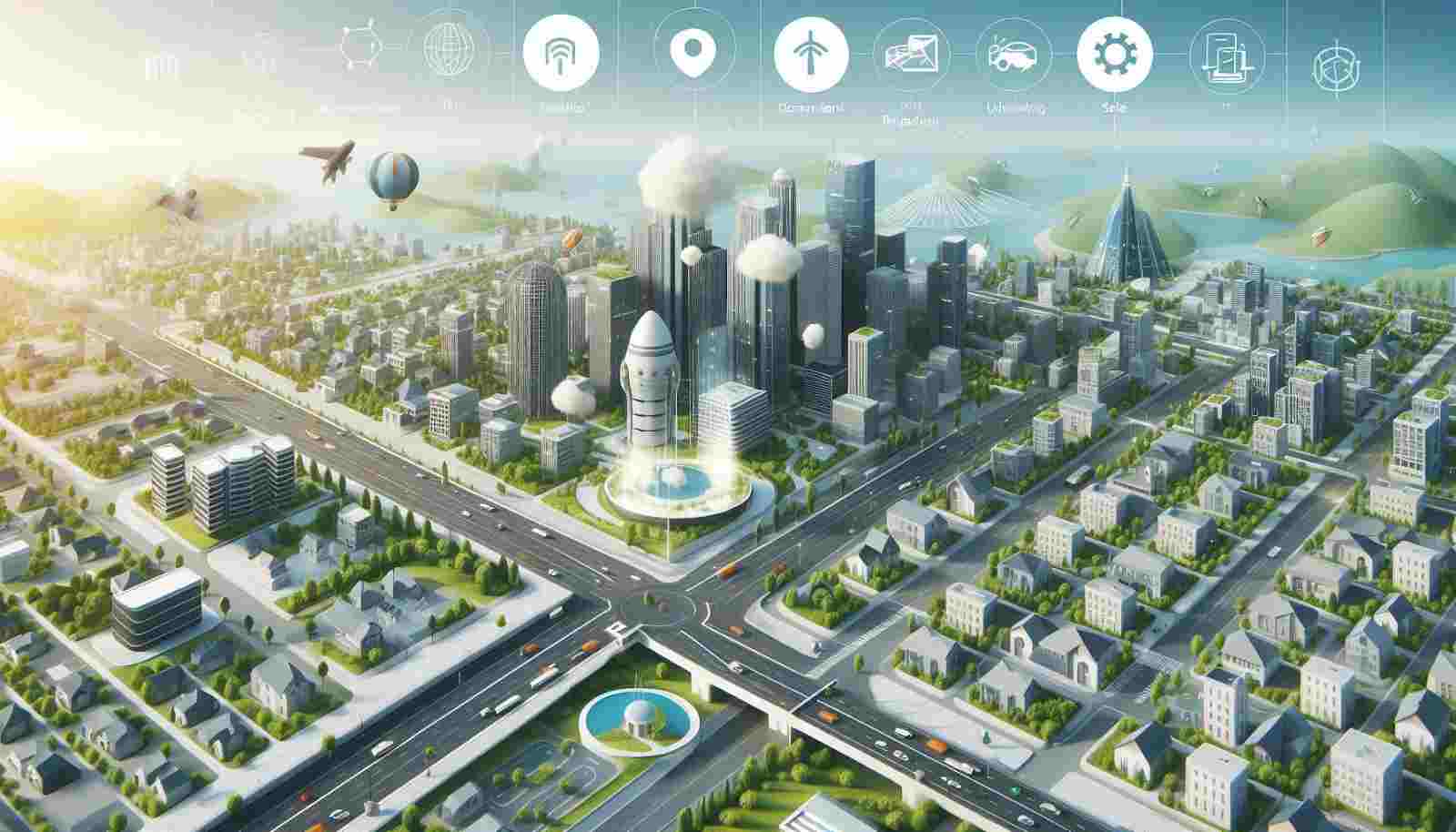
Objectives and Features of Smart Cities Mission Millions of people are descending upon the cities in search of better job opportunities and lifestyles as our country rapidly urbanizes. With this urban population reaching huge numbers, the Govt of India 2015 launched its Smart Cities Mission — to make these spaces more sustainable, efficient, and citizen-friendly. The mission aims to make life better in cities by indirectly drawing from the wider perspective of technology, innovation, and resource management efficiencies. Let's learn about the Smart City Mission, the Objectives of the mission, and its features.
What is the Smart Cities Mission? Smart Cities Mission: An Initiative by the Government to Convert Selected Cities of India into Smart City. A smart city uses digital technology to improve performance and well-being, reduce costs and resource consumption, and engage with its citizens more effectively. The Focus: It's not only about technology but better overall urban governance, infrastructure and services. Introduction Smart cities are touted to be built on the premise of core infrastructure, quality of life (in cities) and sustainable development through technological innovation.
The most impact the mission has is to make cities more efficient, sustainable, and liveable. The initiative to push these smart cities forward is called the “Smart Cities Challenge” and involves a competition for each city where they can submit their bids on how they would incorporate such approaches into their planning or infrastructure.
Objectives of Smart City Mission Given that the Smart City Mission aims to develop a comprehensive urban landscape, it comes as no surprise then also are its objectives broad-based. The mission aims to:
1. Create New Infrastructure: The foremost is establishing basic Infrastructure like water supply, electricity, sewage and roads. It aims to create a high-tech city structure that can efficiently meet the needs of its residents while protecting nature.
2. Promote Sustainable Development: Innovative infrastructure to least waste and a more environment-friendly nature are the main essences of smart cities. New Mission focuses on sustainable practices, renewable energy, and green buildings that allow cities to house future generations without damaging the planet.
3. Increase Livability: Smart cities are built to provide better public services (i.e. healthcare, education, transport, and safety ) thus increasing the standard of living These features include smart traffic management, waste bin handling, and the highest public security.
4. Catalyse Economic Development: The most widespread pledge of a smart city is to frame it as having the infrastructure and facilities prove that thrust for job generation, entrepreneurship and investment.
5. Engage Citizens: In addition to this, smart cities also hit on the factor of engaging citizens with their city by establishing a communication bridge between the government and the public which would entail two-way communication. The residents can also use the apps and other digital platforms where they communicate with their city administration to provide feedback (complaints or ideas for improvement) actively taking part in the governance of the city.
6. Sustainable Resource Use: A smart city also focuses on the sustainability of its resources such as water, energy, and waste using grid management application automation assisted with IoT (Internet of Things). It will maximize resources and minimize the wastage of resources.
7. Digital Integration: The mission aims to integrate digital infrastructure with urban services, such as smart lighting, parking systems, and public Wi-Fi, to increase operational efficiency and provide a higher standard of living.
8. Inclusivity: It seeks to promote an inclusive society that provides a range of affordable housing, slum rehabilitation, and suitable accommodation for the elderly in accessible public spaces with services available across all age groups regardless of economic status.
On the other hand, the government has also introduced various schemes like NABARD Schemes to provide opportunities for Rural Development.
Features of Smart City These features vary from one smart city to another and are tailored based on local needs, regional topography, or the available urban infrastructure capabilities. Some of the key features are:
1. Smart Infrastructure: A similar investment in smart roads, intelligent traffic management systems and integrated transport options as well as 24×7 continuous power supply. Some of the measures taken in smart cities could be an effective approach to transportation and reducing traffic jams.
2. E-governance services: E-governance is one of the most important parts of a Smart City. Idempotent management (Operating indeterminately). This allowed the residents to avail of online public services, lodge complaints, and interact with the government via apps & platforms.
3. Smart Energy Management: Cities are forming hybrid energy systems by implementing both solar panels and traditional power grids known as Hybrid Energy Systems. Smart Grids and Metering spread smart power for you to consume them.
4. Waste Management: Smart cities have technology-based garbage collection and recycling systems. It tracks how full is a waste bin and then alerts the respective Waste Worker to pay the bins a visit to dump them on a real, time-saving basis maintaining cleaner communities.
5. Water Management: Good management of the city guarantees a sustainable supply through smart meters, leak detection systems, and recycling for domestic and industrial activities in cities.
6. Smart Security: Smart Surveillance Cameras, Facial Recognition, and IOT-based Alert systems: The next level of security in Smart cities is taken care of with technologies like smart cameras. This helps to keep the streets of that district safer for all participants.
7. Smart Education and Healthcare: The schools and colleges of the Smart Cities are equipped with a high-speed digital infrastructure, Remote education: Tele-medicine and Digital health records make so much reaching services easier.
8. Affordable Housing and Inclusive Development: Smart cities among other things also aim to address housing shortages by starting affordable housing projects. Smart cities are meant to be slum free- or, focused developed inclusive communities.
If you are interested in business ideas, we have got you covered with Top Government Schemes for Business Growth in India 2024
List of Smart Cities in India From 2024, there will be a total of 100 smart cities selected under the Smart Cities Mission. A few of the major smart cities are as follows:
1. Bhopal : home to an integrated command control centre that watches over what happens in the city, and lives.
2. Ahmedabad : Focuses on sustainable urban transport and smart grid energy systems
3. Pune : Impacts digital through citizen engagement and enhanced public services.
4. Surat : Smart solutions for traffic management, waste disposal, and public safety in Surat.
5. Chennai : Sustainable Water Management, Urban Mobility and Solid Waste Collection.
These — along with other cities like Mumbai, Jaipur, and Bengaluru — are in different stages of setting up smart infrastructure, thereby leading by example for bigger urban centres across the country.
Challenges and Conclusion The challenges ahead The advances made by the Smart Cities Missions are commendable yet there is still a long way to go. They range from getting the funds, attracting skilled manpower, and merging legacy systems with new technology to making sure as many people can use your service. However, the prospects for smart cities in India look brighter ahead with more adoption of Artificial intelligence (AI), the Internet of Things (IoT), and data analytics leading to wider proliferation on various fronts within a city.
While the Smart Cities Mission moves forward and adds more cities to the list, other hand existing cities keep making groundwork for an urban India — one that is urbanized but doesn't end up forgetting where citizen-oriented Development of a new country.
Solutions That Will Revolutionize Your Business Ready to Future-Proof Urban Efficiency for Your Enterprise? Swipe powers businesses with innovative digital solutions to cut operational costs, increase customer reach & drive optimal growth. Swipe provides unlimited scope for you to facilitate a better economy, be it upgrading your infrastructure or adopting more intelligent financial solutions. Come, and be a part of the change that is happening in India—building smart cities and changing your business processes by using Innovation as an enabler. Get started with Swipe for smarter company solutions!
Get started now at Swipe.
FAQs 1. What is Smart City Mission? Launched in 2015, the Smart Cities Mission is a government program that desires to leverage and smarten selected urban centres into forerunners of tomorrow by harnessing the potential of digital technologies for more resilient infrastructure through integrated development solutions.
2. What are the primary objectives of the Smart Cities Mission? The main focus is on Infrastructure, Sustainable Development, Real Estate, Economic Development and Citizen Engagement.
3. How many smart cities are there in India? So far, in 2024, the Smart Cities Mission has selected 100 cities.
4. What are some features of smart cities? Prominent examples involve the deployment of smart infrastructure, governance, energy management, water management, security and waste within a city.
5. What challenges does the Smart Cities Mission face? It faces challenges related to financing, a shortage of available skilled manpower, the ability to integrate technology and systems and even ensuring that all residents feel included in such technology-related development.
.png)
-compressed.jpg)
.jpg)


.png)
.png)
.png)
.png)