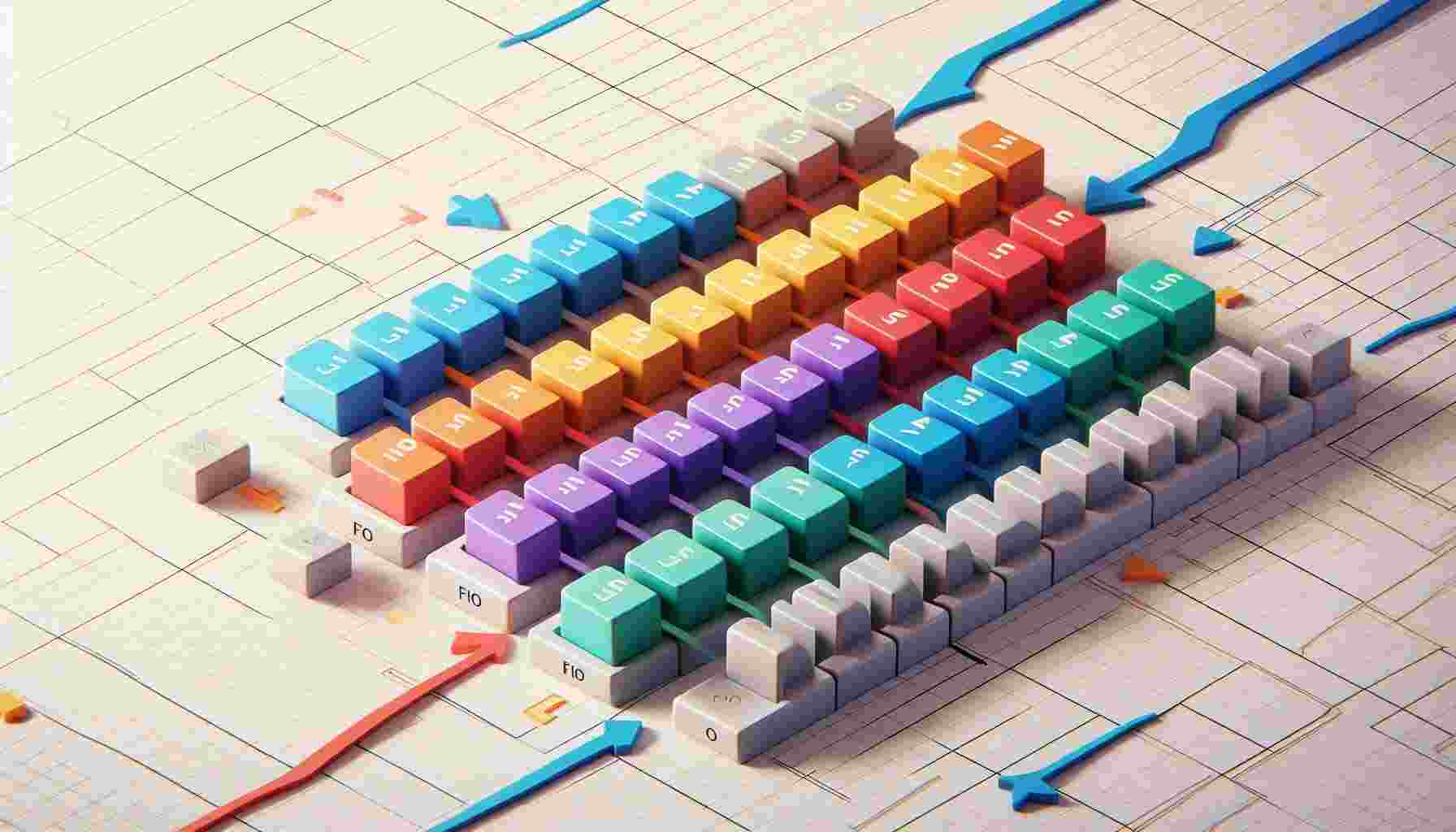
FIFO Full Form and Meaning Managing inventory quickly and accurately is critical for companies, and this is even more so for businesses working with perishable items. One common inventory valuation method is FIFO (first in, first out), which states that older inventory should be used or sold before newer inventory. But what does FIFO mean, and why is it significant? In this ultimate guide, we will discuss FIFO meaning, FIFO full form, and the way FIFO method works, along with examples in India specifically.
FIFO — First In, First Out. It is a method of accounting and inventory management where the oldest stock or items go first, before the newer ones. This is particularly advantageous for sectors working with perishable and time-bound products, for example, food, medications, and retail.
FIFO is a critical principle for businesses in various industries as it helps in managing their inventory efficiently.
Understanding the FIFO Method The first-in-first-out (FIFO) is fairly simple in concept: The first thing you buy or make is the first thing you sell or use. This system supports businesses to avoid stocks going out of date, as it can be utilized for groceries, medicines, dairy items, etc.
How FIFO Works in Inventory Management For example, take a supermarket in India selling Amul Butter:
1. Batch 1: 100 units bought on 1st January @ ₹45/unit
2. Batch 2 : February 1st, purchased 100 at 50 per unit
When a customer is purchasing butter, the supermarket adheres to the principle of FIFO:
1. Batch 1 (₹45 per unit) — First 100 units sold
2. After Batch 1 sells out, the next sales are from Batch 2 (₹50 per unit).
The grocery store takes this precaution by following FIFO so that the good old stock is cleared before the new stock, which will help avoid expiration and money loss.
FIFO in Accounting In accounting, FIFO helps companies to determine true COGS(cogs meaning). This also means that, as product prices rise, using FIFO will, under most circumstances, allow a company to incur the cost of older inventory before the more expensive replacements, resulting in a higher profit margin during inflation.
Example of FIFO in Accounting Let us say, in January, a retailer buys 100 smartphones at ₹20,000 per them and in February another 100 smartphones at ₹22,000 per them. For example, if they sell 150 smartphones, the calculation of cost will be:
1. Limited to 100 smartphones at ₹20,000 (from the January batch).
2. Next 50 smartphones up for grabs at ₹22,000 (from February batch)
FIFO also helps to ensure that older stock gets sold before newer stock, allowing for greater accuracy in terms of profit margins and financial records overall.
Advantages of the FIFO Method Prevents Waste and Spoilage FIFO is crucial for the food and pharma industry to eliminate out-of-date stock. This approach helps minimize waste, as it reduces the chances of products expiring and also ensures that customers receive the freshest products possible.
Accurate Financial Reporting FIFO works to keep accurate general ledger accounts with inventory cost in real time. Accuracy matters, especially for stakeholders evaluating the company’s financial standing.
Higher Profit Margins During Inflation So older stock bought at lower prices gets sold first, which makes for better profit margins. This can be especially advantageous in times of inflation.
Simple and Logical FIFO is simple to implement and corresponds with how inventory naturally moves. It has a no-frills approach, which makes it accessible to companies of all sizes.
Disadvantages of the FIFO Method Higher Taxes in Inflationary Periods Since the oldest and cheapest stock gets sold first, profits look higher, driving up tax bills. These potential tax implications will need to be factored in by businesses.'
Not Ideal for Non-Perishable Items FIFO may not work to your advantage if yours is the furniture or electronics industry. These sectors might have best practices or alternative inventory methods that fit better.
FIFO vs. LIFO: What's the Difference? FIFO (First In, First Out) sells older stock first, and LIFO (Last In, First Out) sells the newest stock first. Here's how they compare:
Feature FIFO LIFO Stock Sold First Oldest Newest Suitable For Perishable Goods Non-Perishable Goods Profit Margins in Inflation Higher Lower Tax Liabilities Higher Lower
It needs to be noted that this method (LIFO) lowers tax during inflation but results in fat missile (missed actual) flows on the shelf.
Real-World Applications of FIFO in India Retail Stores (Big Bazaar, DMart, Reliance Fresh) Grocery stores, as a result, rotate their items through FIFO to sell old stock before they get new stock, which preserves the quality and freshness of their products and promotes customer retention.
Pharmacies (Apollo, MedPlus, Netmeds) The first-in-first-out method (FIFO) provides that the drugs with earlier expiration dates will be sold before the later ones while maintaining the safety and efficiency of the medicines for the consumers.
E-commerce (Flipkart, Amazon India) Warehouses also implement FIFO when dispatching goods or products to their customers because they do not want any inventory to become obsolete, thus allowing the best way to maximise storage and minimize losses.
Restaurants and Food Chains (McDonald's, Domino's, Haldiram's) FIFO helps keep food fresh and minimize waste, vital for customer health and business reputation.
Implementing FIFO in Your Business With FIFO, it involves quite a bit of planning and implementation. In this article, we will walk you through how you can implement FIFO in your business with these simple steps:
1. Assess Your Inventory Start with a complete inventory assessment. Map out breakdowns of your diary into perishable and non-perishable items, along with their purchase dates and shelf lives.
2. Organize Stock Accordingly Make older inventory easier to access than newer inventory. Also, with this physical layout, FIFO allows for the natural flow of goods.
3. Train Staff Familiarize Your Staff with FIFO Proper training is another important factor here as it makes sure employees adopt the FIFO method without fail.
4. Use Inventory Management Software Use inventory management software to monitor stock movement and automate FIFO processes. FIFO settings are available in many modern systems, allowing businesses to stay accurate without adding extra effort.
5. Conduct Regular Audits Conduct periodic audits of your stock to ensure FIFO is being implemented. Audits reveal discrepancies, expired stock, or process inefficiencies.
6. Monitor and Optimize Track inventory turnover and adjust as necessary to ensure efficiency. To improve FIFO, make the layout and the stocked rotation adapt to stores.
Conclusion FIFO method is a basic principle of inventory management and accounting that enables the minimization of waste through tracking, accurate financial record keeping, and profit maximization. From small grocery shops in India to the largest multinational, FIFO makes certain that older stock is emptied first, which leads to smooth operations.
FIFO is the preferred method for businesses that offer perishable products, as it helps to preserve product quality and enhance customer satisfaction. Trained on data until October of 2023.
FAQs What is the FIFO method in simple terms? FIFO stands for First In, First Out, which is an inventory management system in which stock that has been kept longer has a higher likelihood of being utilized or sold the sooner than stock that has been kept more recently to avoid wastage and maintain freshness of items.
Why is FIFO important in inventory management? The importance of FIFO lies in its ability to help businesses reduce waste, maintain product quality, and provide accurate financial records by selling older inventory first.
How does FIFO affect financial statements? Understanding FIFO: The financial statement impact of FIFO is that as the most recently purchased inventory costs are used for the cost of goods sold, and because prices are rising when using FIFO, profits & tax liabilities will tend to be higher in inflationary times.
What industries benefit the most from FIFO? FIFO is widely used in industries such as food, pharmaceuticals, retail, and e-commerce, where perishable goods are sold, helping keep perishables fresh and avoiding losses from expired stock.
Can FIFO be used for non-perishable goods? Yes, FIFO works for non-perishable but it's predominantly used in industries that deal with expiration like food and medicine, etc.
.png)
-compressed.jpg)
.jpg)


.png)
.png)
.png)
.png)