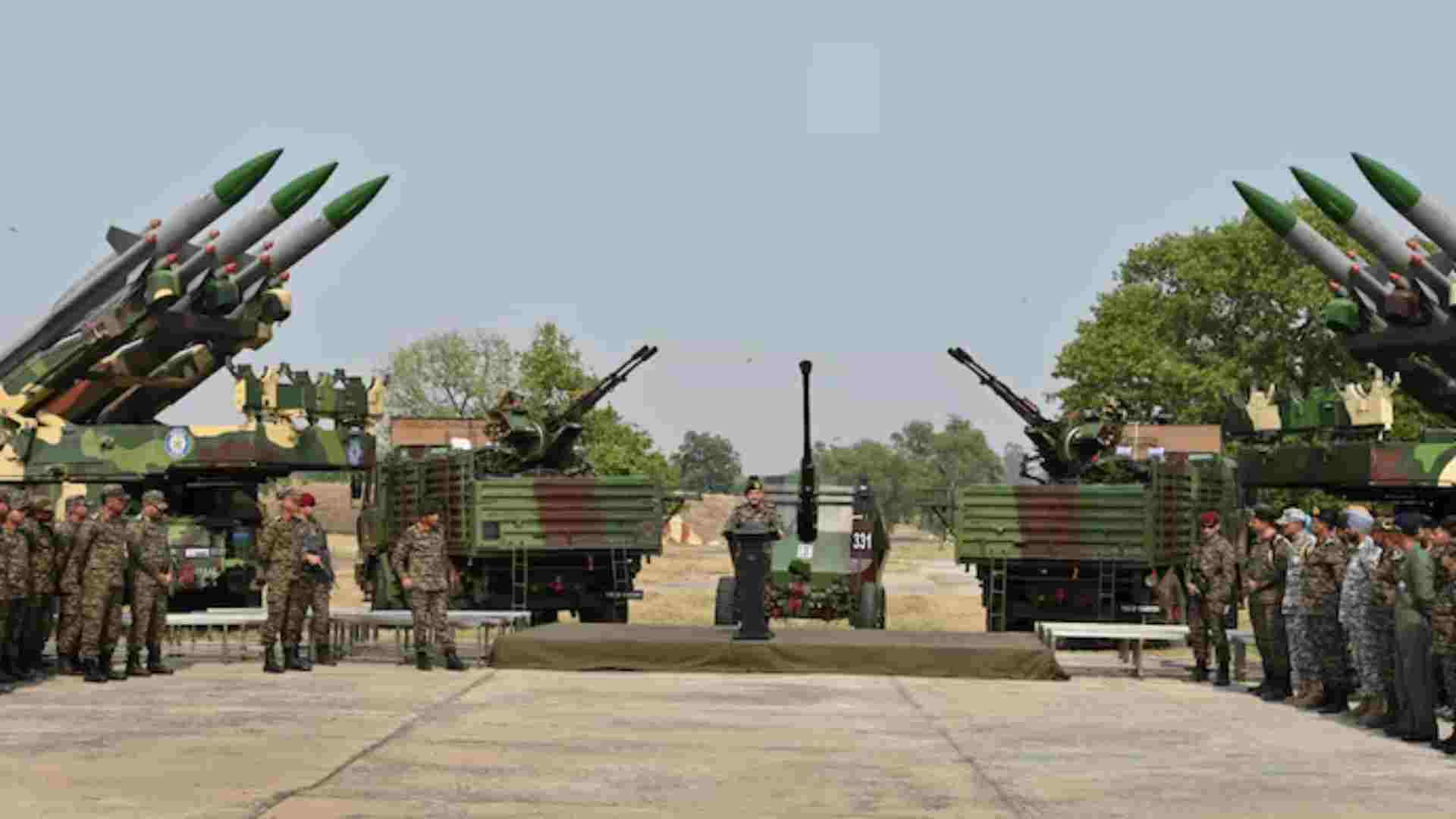
Defence Allocation Sees Biggest Surge in a Decade After Operation Sindoor India's Defence Budget has received record levels of funding following ten years of little or no growth. Additionally, the Government of India has made military preparedness, modernisation, and capability development a top priority for future defence expenditures. In the Union Budget for 2026, Finance Minister Nirmala Sitharaman announced that India will see a 15% increase in military spending to ₹7.85 trillion over the previous year.
The magnitude of this increase is entirely attributable to the success of Operation Sindoor, which indicates the extent to which the government intends to develop an Army that can engage and defend itself from both foreign and domestic aggressors as the key factors defining how we, as a nation, will prepare for the future with respect to our national security will be determined by our speed of development and technological superiority in comparison to the rest of the world.
Capital Expenditure Takes Centre Stage The largest increase in the capital portion of this year's defence budget is 22%. This brings the total capital budget to ₹2.19 lakh crore (approximately $32bn). The capital budget covers all of the costs involved with acquiring and supporting military hardware, such as fighter jets, ships and submarines, missile systems, advanced communications, and advanced surveillance.
By elevating its capital budget
Comparison With the Previous Year For the financial year of 2026, India's entire defence budget was calculated at ₹6.81 lakh crore with a capital component of ₹1.80 lakh crore. This represents a considerable increase from previous budgets, both absolutely and on a percentage basis.
Although India has gradually increased its defence budgets for years, the majority of annual increases during the last decade have been limited to 9% - 10% per year. The latest increase of 15% is therefore the highest increase observed in many years and shows how quickly the Indian government is treating the modernization of India’s armed forces.
Biggest Jump in Over Ten Years This is a substantial shift from the previous incremental budget process to a large increase, which many analysts see as one of the most significant expansions of defence spending in the last decade, prompted by the changing nature of security threats and how they have been experienced through recent operations.
The timing of this allocation indicates that Operation Sindoor
Focus on Modernisation and Preparedness Projected increased capital expenditures will support the purchase of cutting-edge systems, force multipliers and domestic defence systems, and will also help achieve larger operational readiness goals associated with reducing reliance on legacy systems as well as equipping the military better to meet emerging threats.
Furthermore, this allocation supports the government's goal to expedite modernisation projects that have previously experienced delays due to budget constraints. With more funding available, defence planners are expected to give top priority to projects that will provide greater mobility, lethality, surveillance and joint operational capability.
A Strong Signal to the Armed Forces The latest defence budget makes it abundantly clear that military capability and readiness are at the top of the list of government priorities. A large increase in funds allocated to capital expenditure shows that the Government has made a commitment to improve national security by investing over the long term as opposed to only short-term security measures.
With the continued evolution of global and regional security dynamics, the record allocation for defence enables India to develop an even more robust, modern and technologically superior military posture in the future.
Conclusion With a staggering ₹7.85 lakh crore total defence budget for the year 2026, the sharp increase in funding for defence signifies a major change in the Indian Government's budget priority. This increase was driven by a renewed emphasis by the Indian Government on military readiness and long-term preparedness, as well as demand for new and modernised equipment, especially in the capital expenditure category, to meet existing needs of the armed services.
The above changes (along with Operation Sindoor) represent not only a necessary response to the operational needs of the Indian military but also a reaffirmation of the future use of modern and technically advanced equipment as part of India's defence policy objectives.
FAQs Q1. Why did India increase its defence budget sharply this year? India raised defence spending to strengthen military preparedness and accelerate modernisation after Operation Sindoor.
Q2. What is the total defence allocation in the latest Union Budget? The total expenditure on defence for the country will now reach ₹7.85 lakh crore, which is nearly a 15% increase from last year.
Q3. What is capital expenditure in the defence budget? The Ministry of Defence's capital expenditure is used to purchase major items such as weapons, aircraft, warships, missiles and the long-term upgrade of defence capabilities.
Q4. How much has capital expenditure increased? Capital expenditures for the defence services have increased by 22% to ₹2.19 lakh crore. This is the largest increase in this budget category in over ten years.
Q5. Which armed forces will benefit from this increase? All three services, namely the Indian Army, the Indian Air Force and the Indian Navy, will receive modernisation of their equipment along with new advanced weapons.
.png)
-compressed.jpg)
.jpg)


.png)
.png)
.png)
.png)