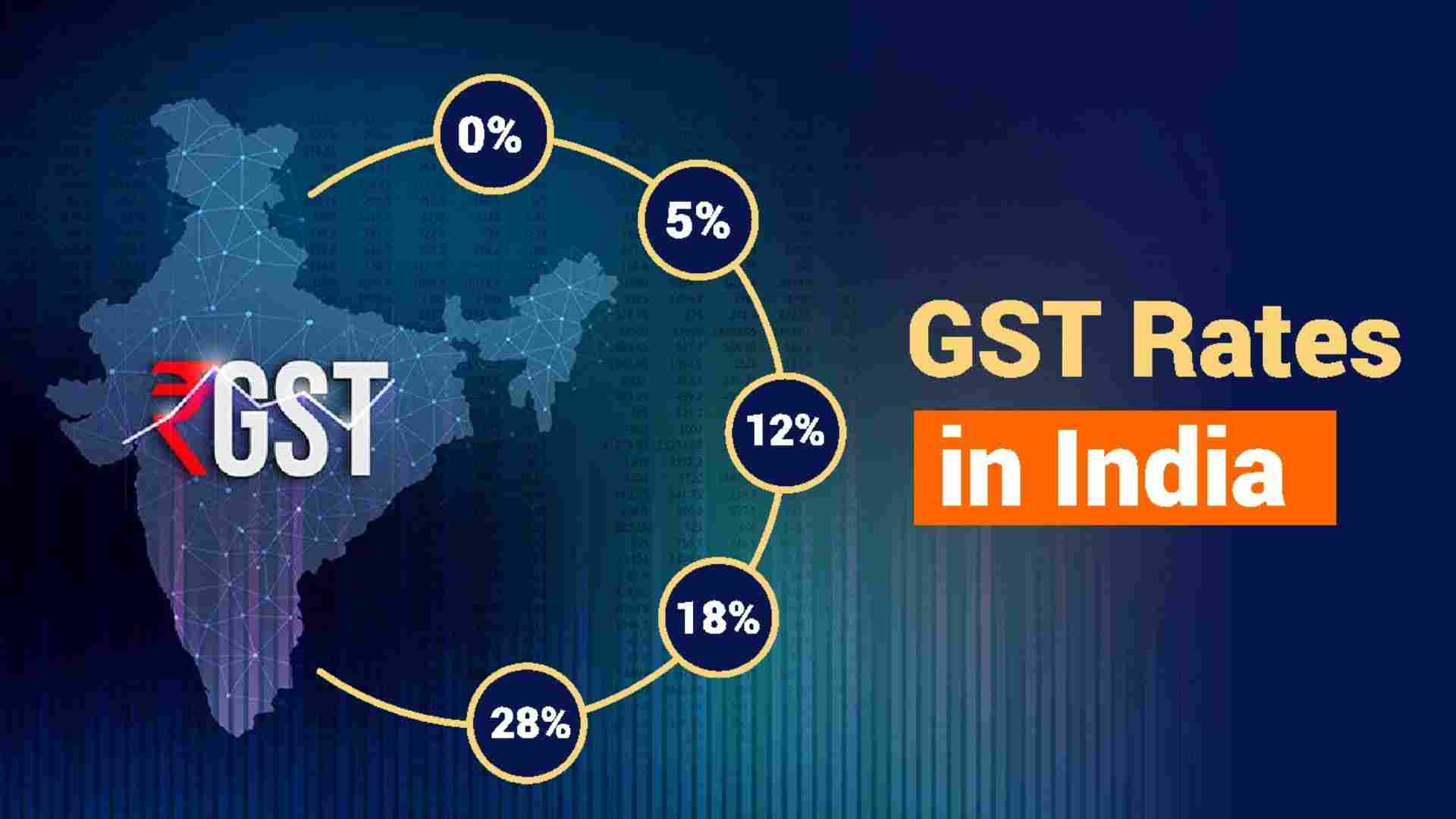
GST slabs in india: detailed guide to 0%, 5%, 18%, 40% and special GST rates The Goods and Services Tax in India consists of a system that uses multiple rates rather than one flat rate to tax the items sold based on their essentiality, nature (i.e. common or privileged) and/or government policy. The GST currently uses a structure comprised of 5% as the merit rate of tax on some items, 18% as the standard rate that most items are taxed at, 40% as the demerit rate for certain items and no tax or other special rates for a variety of goods and services. In addition to pricing issues for businesses, the GST slabs have implications for invoicing, how goods and services under one particular GST slab
What are GST slabs? GST slabs are the tax rates allocated to different types of goods and services under GST. They are necessary to ensure that not all goods and services are taxed at the same rate. Goods that are necessary for consumers will generally be exempt from or taxed at a low rate. Mass-produced items are generally subject to a low or standard tax rate, while luxury goods and other goods that are considered demeritable will be taxed at much higher rates than other products. This setup is designed to create a balance between affordability for consumers and revenue for governments.
In practice, the GST slab is used to calculate the amount of tax that will be added to the sale price for a good or service. For example, the tax liability on a product that is taxed at 5% will look very different from the tax liability
Main GST slabs at a glance GST Rate Broad Meaning Typical Use 0% Nil-rated or exempt category Essential goods and selected notified items 5% Merit rate Common-use and lower-tax goods 18% Standard rate Regular goods and services across many sectors 40% Demerit rate Select luxury or sin goods/services Special rates 3%, 0.25%, 1.5%, and some residual 28% categories Specific notified goods, such as precious-metal-related and other defined categories
Difference between GST slabs in india GST Slab Nature of Tax Rate Used For Tax Burden Impact on Price Common Business Concern 0% Nil-rated or exempt Essential goods and selected necessary items No GST charged Keeps products affordable Correct treatment of exempt, nil-rated, and zero-rated supply 5% Merit rate Daily-use and commonly consumed goods Low Small increase in final price Proper classification of essential and mass-use products 18% Standard rate Regular goods and services across many industries Moderate Noticeable impact on selling price Most common slab used in billing and compliance 40% Demerit rate Select luxury and policy-sensitive goods Very high Major increase in final price High risk if classification is wrong Special Rates Specific notified rates like 3%, 0.25%, 1.5%, and residual 28% Precious metals, jewellery-related and other notified items Varies by item Depends on category Need for exact HSN/SAC-based verification
The 0% GST slab The 0% slab is for products that are un-taxable or exempt from taxation. These are products that the Government would like to be able to keep available and affordable for consumers, and many items that fall into this category include certain food products and several medicines that are necessary for life.
People tend to assume the 0% slab means they have no potential for an impact on compliance; however, this is not the case. Under the GST law, exempt supply, nil-rated supply, and zero-rated supply all mean something different from one another. A zero-rated supply typically relates to exports and will have different consequences for input tax credits than an exempt or nil-rate supply. Therefore, businesses should not assume they can rely solely on the 0% designation for purposes of compliance, as they should always confirm what the actual legal classification is.
The 5% GST slab The 5% slab (or the merit rate) is for everyday products of an essential nature that are not expected to bear a large tax amount. A lot of the items that would fall under the 5% slab are everyday or household products, like many consumer items and food-related items.
For the market, this slab plays a big role as products that have a 5% tax rate are typically purchased in large quantities. The lower GST rate improves the product's value and can lead to an increase in sales; a higher slab can lead to a decrease in demand for that same product. In addition, for small distributors, retailers and fast-moving consumer goods (FMCG)
The 18% GST slab Standardised GST rates are the same for all items in this category, which includes a very large percentage of commercial sales transactions. Many older GST rates were transferred into this group after GST was implemented and then brought under the correct category.
Under the general standard rate of 18% are items such as air conditioners, televisions 32 inches and under, dishwashers, cement, small vehicles, and motorcycles with engine displacement less than 350cc. This indicates that the 18% rate has become the basic reference point for a high percentage of the goods and services economy.
For companies in general, the 18% standard is the most common rate impacting their day-to-day operations. Companies that sell household appliances, everyday items for general use, spares and consumables for the workplace, or mainstream services will find that their rate of tax is likely to be 18%. Therefore, the number of invoices generated, how ERP systems are configured, and where tax-exemption checks were applied need to be very precise.
The 40% GST slab A slab rate of 40% has a demerit rate associated with it. This slab rate is an extremely high rate of GST, designed to represent only a few designated goods and services that are either luxury in nature or for specific public policy reasons. Therefore, there is a limited, designated group of goods and services subject to the 40% slab rate instead of the normal, day-to-day items.
The 40% slab rate has a significant and easily identifiable impact; therefore, once the goods enter the 40% slab rate, it will result in a very large tax impact, which would substantially affect their end price and therefore their market competitiveness. Consequently, businesses that sell premium goods, in luxury categories, or consumption goods that are subject to high tax rates must make a concerted effort to ensure proper product classification, invoicing and pricing strategy, as an erroneous classification at this level can create a very large tax liability.
GST slab rate comparison table (India) GST Slab Category Type Purpose Common Items Business Impact Compliance Notes 0% GST Slab Exempt / Essential goods Keep basic goods affordable and accessible Basic food items, essential medicines, life-saving drugs No GST charged, but still affects accounting and classification Must distinguish between exempt, nil-rated, and zero-rated (exports)—they are NOT the same 5% GST Slab Merit rate / Essential daily use Support affordability of everyday essential goods Packaged food items, household essentials, FMCG products Boosts consumption due to low tax; impacts pricing and stock turnover Important for retailers and FMCG businesses for margin planning 18% GST Slab Standard rate Default GST rate for most goods and services Electronics, ACs, TVs (≤32”), cement, motorcycles (<350cc), services Most commonly applied slab; major impact on invoices and ERP systems Requires accurate classification in billing and tax systems 40% GST Slab Demerit / Luxury slab Discourage luxury or non-essential consumption Luxury goods, sin goods, premium/high-end items Very high tax increases the final price significantly Misclassification can lead to heavy tax liability; strict compliance is required
Special GST rates that still continue The description of the rate schedule is not wholly accurate when it only describes them as having rate percentages of: 0%, 5%, 18% and 40%. The rate structure uses the same framework with a few other special rates (3.00%, 0.25% or 1.50%), as well as some residual categories for specific rates (e.g. 28%). So while there is a clearer structure to the system, returns and exemptions on products or services due to a different legal authority may still apply.
A majority of special rates apply only to certain categories of products, such as products that contain precious metals and other specified items. This is important because most simplified blog articles only provide the major slabs of the rate structure. However, there are still laws regarding GST compliance that rely on how each item is classified based on its respective notification. Therefore, businesses should avoid general assumptions such as "if it is considered high value, it gets taxed at 40%" or "there is no longer a residual rate of 28%". The actual rate structure has much more nuance than that.
Why correct GST classification is so important Recognising slab categories alone cannot be sufficient! The major work of working to comply is finding out the right HSN Code for your items or SAC code
If you are not classifying correctly, several potential issues could happen, e.g., tax underpayment, which could give rise to levying of interest and penalties; over-collecting taxes, which will hurt customers and pricing before your competition; having recipients of your service have disruptions in claiming input tax credits; and even causing litigation against you, which will be due to having filed returns late, etc. Therefore, it is equally important to verify the rate you will be using prior to assuming this rate applies before filing your return.
How businesses should apply GST slab knowledge in practice To determine exactly what the product or service being offered is, the first step is to determine the exact product or service. Determining which HSN or SAC code applies is the second step. The third step is to check the current notification status and not rely on old invoices, old ERP master files, or old articles on the Internet. Since the GST rates can be changed based on recommendations made by the Council and the notification process afterwards, businesses must continually utilise the latest official position when deciding to bill customers.
Another important practice for businesses to do when any rate has changed is to update their software and internal tax master files. If the rate has been changed but the invoicing system has not, then the business may continue to charge the wrong amount of tax without being aware of it for an extended period. This will then have a ripple effect on billing, purchasing, GSTR report, and credit reconciliation.
In reviewing all products and items, a good internal control is to review high-volume and high-value separation. High-volume products are important, as a minor tax difference can accumulate to a huge amount over time. High-value products are also critical, as incorrect classification could expose a business to significant liability for just one transaction. This is particularly true for items that could be in premium, demerit, or special rates.
Conclusion India's Goods and Services Tax (GST) is a multi-tiered tax system organised around classifications. The current four-tier structure organises all goods and services within an HSN/SAC and includes 0%, 5%, 18%, and 40%, with 5% considered the merit rate, 18% as the standard rate, and 40% as the demerit rate for certain goods and services. It also maintains the existing four-tier system of special rates – for example, 3%, 0.25%, 1.5%, and some residual 28% schedules.
As a business owner, this means that there is no substitute for confirming the exact HSN/SAC code and verifying the most recent notification, so be sure to keep your billing systems up to date. This is the safest way to ensure compliance with GST rates and prevent non-compliance issues.
FAQs What are GST slabs in india? GST slabs reference different kinds of tax rates applied to services and goods, depending on the types of goods or services they are.
What is the standard GST rate? The most common GST slab is the 18%, which is the general standard GST rate for many types of goods and services.
What does the 5% GST slab cover? Essential and merit-based goods and regular daily use items are generally classified as 5% GST slabs.
What is the 40% GST slab for? Luxury goods or demerit goods can generally be classified using 40% GST slabs.
Are there any GST rates other than 0%, 5%, 18%, and 40%? There are also a few special cases involving products that are subject to different GST rates, such as those related to jewellery and other products that have been notified to the GST authorities.
Why is correct GST classification important? By appropriately classifying the products that you are selling as either being in the correct GST slab, you reduce the probability of errant billing, potential tax disputes, penalties, and difficulty in preparing or filing GST returns.
.png)
-compressed.jpg)
.jpg)


.png)
.png)
.png)
.png)