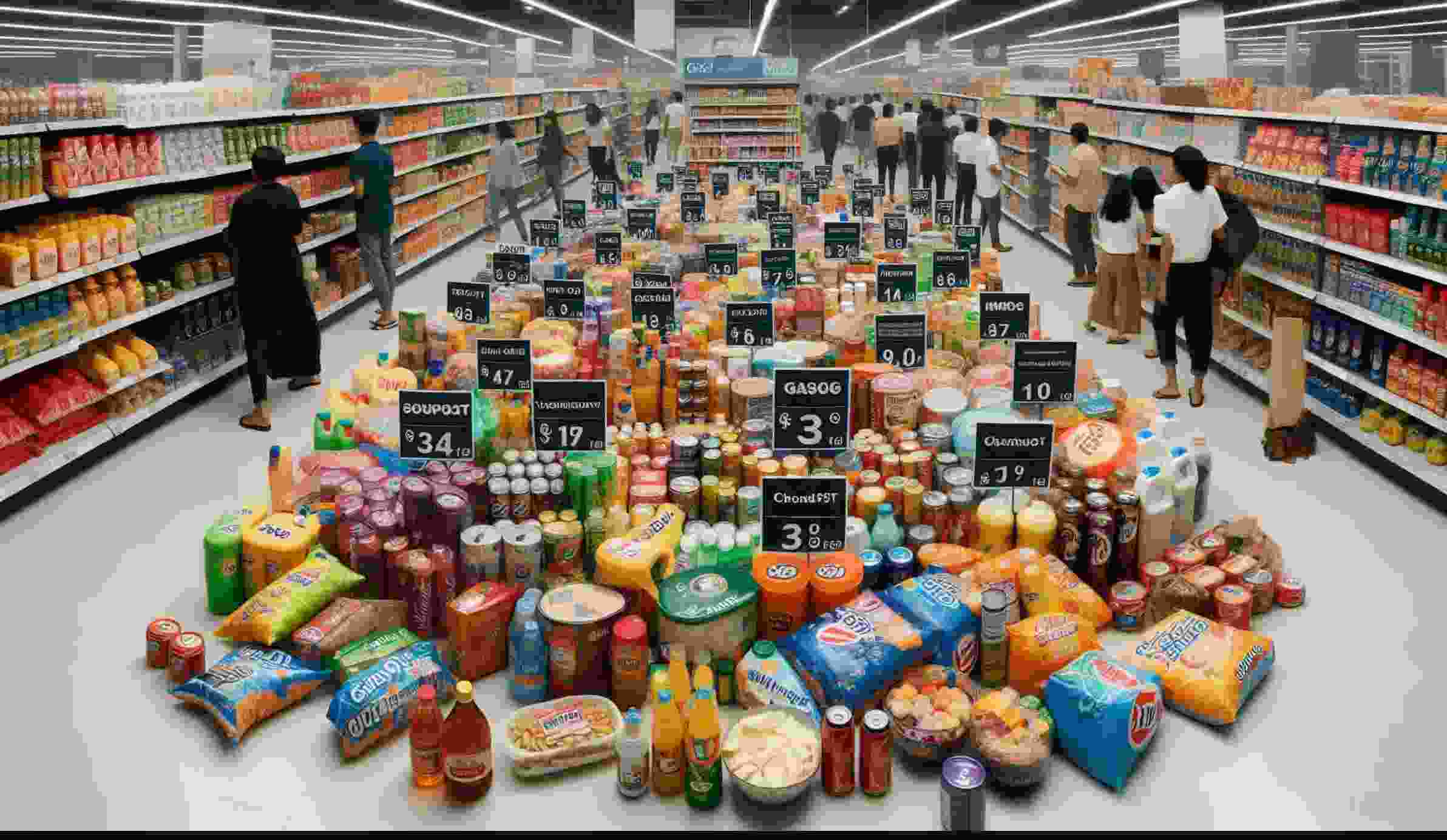
Impact of GST on the FMCG Sector The introduction of Goods and Services Tax (GST) in India on July 1, 2017, was a path-breaking event in the country's economic history. GST simplified the tax architecture, abandoning a complex patchwork of inter-state and intra-state taxes for both industries through its implementation as a unified indirect tax system. FMCG: The Fast-Moving Consumer Goods (FMCG) sector is undoubtedly one of the most widely affected among all tax brackets at GST due to a long list of products and innumerable consumers.
This blog explores the effect of GST on the FMCG industry by focusing on aspects like product pricing, tax compliance, operational efficiencies and consumer behaviour. It also discusses the issues and challenges that the industry faced during this transition and perspectives on the advantages and consequences of GST for FMCG companies in India.
What is GST, and Why Was It Introduced? A GST was introduced to correct the various ineffective characteristics of the country's taxation system, which used to be seen with cascading taxes, tax-on-tax scenarios and discrepancies between states. Goods and Service Tax (GST) is charged at every stage of value addition on a destination basis with input tax credits seamlessly being available through the supply chain.
GST has some main objectives which are:
Elimination of Tax on Tax: GST replaces several older taxes with a single tax regime and reduces tax cascading that used to be a big issue for businesses earlier.
Facilitating Compliance: With a single tax regime, businesses have simplified filing and record-keeping which lowers the overall compliance cost.
Constructing a Common Market: Uniformed tax rates eliminate the barriers to inter-state trade and enable FMCG enterprises to expand across the country.
FMCG as a sector with high turnover products and low, relative to other sectors, margins were best placed to cash in on these reforms.
Impact of GST on FMCG Products FMCG includes food items, personal care products, household durable goods and over-the-counter pharmaceuticals. These products have now been brought under the GST rate of 0% up to 28%, based on their classification.
Tax Slab Adjustments: Important goods such as unbranded grains, milk and vegetables are necessarily excluded from GST (0% slab). Apart from this, the tax rate on packaged food items and soaps as well as shampoos is 12-18% Goods such as chocolates, cosmetics, and aerated drinks will attract tax at a 28% slab. Example Impact: Previously, total taxes on FMCG goods amounted to 22-24%, combining excise, VAT, and CST. Under GST, items like detergents and shampoos are taxed at 18%, offering cost reductions for manufacturers and consumers.
Input Tax Credit(ITC): The input tax credit , one of the most advantageous aspects of goods and services tax for fast-moving consumer goods (FMCG) companies, is that they can claim it on expenses incurred at each stage. It has lowered the tax load and increased profitability.
Effects of GST on Consumer Goods 1. Pricing Adjustments GST slab-wise reclassification of products has worked both ways as far as pricing is concerned. However, luxury FMCG goods have seen price hikes here even as lower tax rates made many essentials cheaper. For instance:
Prices of goods such as sugar and edible oil which were earlier taxed at higher rates are now within reach. On the flip side, GST hiked on processed foods and cosmetics. 2. Improved Transparency Land GST is based on the principle of maintaining the same and simplified tax system. The featured advantage of the new reduced VAT law for restaurant patrons is transparency Under the VAT regime, while the nature and method of simulation might not have differed much, the context varied enormously from state to state.
3. Improved Accessibility to Products GST has simplified interstate trade by doing away with entry taxes and octroi. This has enhanced the supply of fast-moving consumer goods (FMCG) towards available in areas outside cities and is expected to further improve access to products, including at lower prices for consumers.
How GST Changed FMCG Pricing Strategies GST regime also necessitated a change in the FMCG product pricing strategy. Here’s how companies adapted:
1. Products Reclassification: FMCG firms realigned formulations and/or re-packaged products to benefit from lower tax rates. For example:
Lowering sugar content in beverages to migrate to a lower GST level. Modifications in Packaging to meet the threshold level requirements. 2. Competitively Priced: Due to savings in ITC and improved logistics, the cost benefit has been passed on to the consumer making pricing more competitive. Among other things, the availability of discounts and promotional offers has gone up to target price-sensitive customers.
3. Emphasis on Premiumization: As the effective tax rates on some luxury goods are higher, FMCG players have launched premium product lines with higher margins that largely cater to high-income groups.
You might also be interested in our other blog on Import and Export under GST .
Understanding FMCG HSN Codes Under GST HSN coding forms an inherent part of GST compliance. The HSN code of every FMCG product decides the rate of tax on that particular item. Benefits of HSN codes include the following:
1. Correct Taxation: By correctly classifying products, the system ensures that they are taxed appropriately and prevents penalties.
2. Easy to file GST returns: With the presence of HSN codes, filing returns becomes quite easy.
3. Facilitated Trade: These codes help in having a uniform identification of products which is very much essential for domestic as well as international trade.
For example, the HSN code for toothpaste is 3306 and it is subject to an 18% GST slab.
Challenges Faced by the FMCG Sector However, the GST did create a transitional phase for FMCG companies:
Transition costs: Overall, the adoption of GST caused limited disruption due to software upgrades, training and process rationalisation.
Compliance Burdens: For smaller FMCG players, keeping accounts straight filing regular returns and complying with GST rules has never been a cakewalk.
Cash Flow Stress: Since the GST was payable at the point of supply, input tax credit claims were also deferred for a while causing temporary problems with working capital shortage issues in companies.
Positive Outcomes for the FMCG Sector However, the long-term impact of GST has already been positive for the FMCG sector as seen through
1. Supply Chain Optimization: The elimination of inter-state taxes has been a boon for goodies and transportation trolleys. Instead of operating warehouses in every state, warehousing strategies evolved from numerous state-specific centres to modern just-in-time and regional middle warehouses that significantly reduced both costs and transit times.
2. Decrease in Tax Avoidance: GST is digitised which means fewer people involved hence more compliance and less tax evasion that was common with the previous system.
3. Growth in rural consumption: With logistics and reduction of cost, products reach deeper into rural India increasing the consumer base for FMCG companies.
Consumer Benefits Under GST As far as the consumers are concerned, GST has resulted in several benefits.
Reduction in Price of Essentials: Tax concessions on essentials such as cereals, milk and veggies have contained prices.
FMCG Products Regional Availability: Less Logistics Barriers More Choices
Clear Visibility: A transparent invoice gives clarity to consumers on the taxes, helping build trust in brands.
Future Outlook The GST is evolving with changes in rates and processes from time to time. This creates the space for growth and innovations, especially for the FMCG sector;
Digital Transformation: Organizations are investing in solutions that simplify GST compliance, increase supply chain efficiency, and enable customer experiences.
Lower Barriers to Entry: The same taxes translate to the same competition leading aspiring entrepreneurs into the market.
Emphasis on sustainability: FMCG companies are looking into sustainable practices and eco-friendly packaging to help sincere consumers and fit with other low-tax slabs.
Conclusion There is no denying that the GST has transformed the landscape of FMCG in India. GST has reduced the complexities of tax structure, removed inefficiencies, and instilled transparency to foster an environment conducive to growth and innovation. The FMCG sector was one of a few that contributed significantly to the growth in India; they faced a wide range of challenges at first, but it stirred long-term advantages and outweighed losses with disruptions.
With the industry evolving to grow under GST, it is a shining example of how a nation benefits from having a common source-based tax structure. GST is thus positioned as a major pillar of India's economic modernization, which will benefit both consumers and businesses.
Make your FMCG GST compliance a lot more simple with Swipe It becomes somewhat difficult for FMCG to deal with the hurdles of GST but Swipe tends to be trouble-free within such a process. Our intuitive invoicing and accounting software makes managing GST filings easy with features such as automated HSN code assignment and input tax credit optimization—all delivered in a compliant manner.
Say goodbye to manual errors and tedious calculations. Thus Swipe is a one-stop solution for your business, keeping your all-time-ready for GST business growing output. So, are you preparing to digitise your GST processes? Let Swipe take your tax on autopilot!
FAQs 1. What effect has GST had on the cost of producing and selling price of FMCG products in India? GST restructuring of tax rates for FMCG products induced reductions in the price of certain essential items (those subjected to a lesser rate) while others like cosmetics, and processed food, where the effective rate was higher.
2. What are the benefits of GST for FMCG companies? The advantage of input tax credits, simplification of the supply chain, reduction in logistics cost and a unified tax makes IND AS favourable for FMCG companies providing significant operating efficiency and better profit margins.
3. The FMCG sector faced one of the most arduous transitions during the GST. What were the challenges? Challenges mainly were in terms of system upgrades, training resources, managing compliance requirements and impact on cash flow due to delays in input tax credit.
4. What is the Impact of GST on Consumers of FMCG Goods? Increased price transparency for consumers, reduction in essentials cost and improved access to FMCG products following effective channel development-> The net positive impact on the community.
5. How are HSN codes connected to GST compliance for FMCG products? GST levies a special tax rate on FMCG products, and thus even the respective HSN code plays an important role in ensuring appropriate taxes are imposed keeping compliance and smooth record maintenance intact.
6. How has the implementation of GST affected the pricing strategy of FMCG products? GST brought similar taxes under one umbrella, leading to better pricing and cost efficiency for FMCG products. That enabled companies to play around with prices and set them competitively, taxing essentials at a lower rate and discretionary goods higher which affected their pricing strategies.
.png)
-compressed.jpg)
.jpg)


.png)
.png)
.png)
.png)