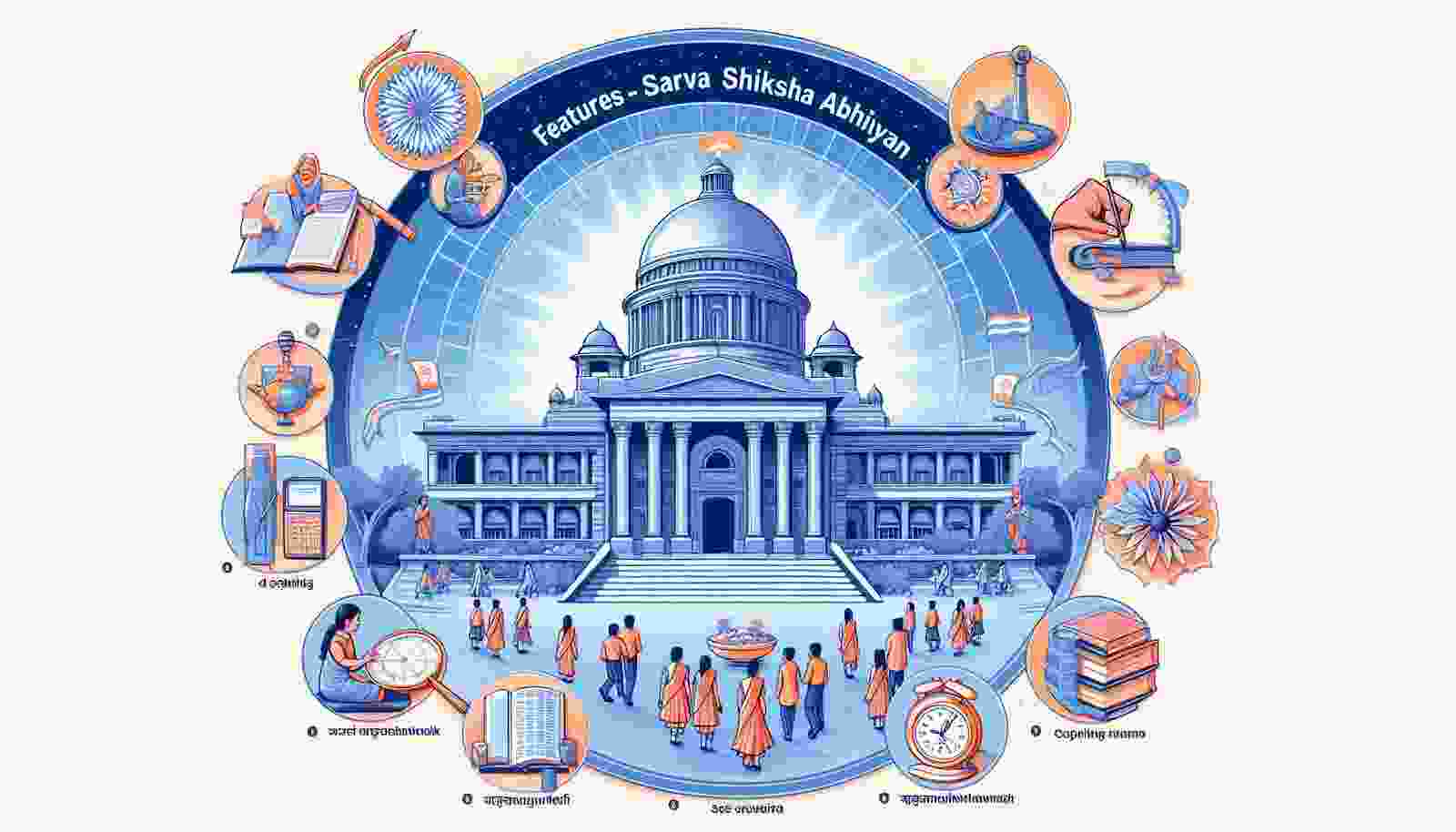
Features and Objectives of Sarva Shiksha Abhiyan (SSA) SSA, as SSA Shakshar Bharat advertisement (2008) — "Education is the master key that can open almost every door of human welfare." Further, SSA has so far been an important instrument for change; it has transformed the shape and content of elementary education in India. SSA is a flagship program that has been running since 2001 to achieve the Universalization of Elementary Education (UEE) by ensuring free and compulsory education for children in the age group of 6-14 years. This is a landmark move towards the implementation of constitutional entitlement for the right to education in India.
Features and Objectives of Sarva Shiksha Abhiyan (SSA)
This Blog talks about the features, objectives and importance of SSA in brief along with how this initiative has changed the face of the education system in India.
What is Sarva Shiksha Abhiyan? Sarva Shiksha Abhiyan means "education for all movement". This scheme is centrally sponsored where the centre and state along with local bodies work hand in hand to make sure quality education reaches every child. The concept of education being a right not only a need, SSA works towards compensating for educational inequities in the society on account of social, regional and gender disparities.
The program takes an integrated perspective on achieving universal elementary education that is not just limited to reach, but also retention and quality in schools. SSA has introduced a sense of accountability and inclusiveness in the education system by encouraging community ownership.
Objectives of Sarva Shiksha Abhiyan Some of the main missions of SSA are:
1. Universal Access and Enrollment: Every child, 6-14 years of age, has primary and upper-primary education The SSA concentrates on the provision of new schools in underserved areas and alternative modes of education for out-of-school children.
2. Objective: Reduce dropout rate and cater continuity till completion of elementary education (five years of primary and 3 years of upper primary schooling)
3. Bridging the gaps: Close Gaps by addressing inclusion among Scheduled Castes (SC), Scheduled Tribes (ST) and girls
4. Step up Quality of Education : Improve education quality by devising relevant curriculum, teacher training and infrastructure improvement.
Features of Sarva Shiksha Abhiyan Some key characteristics of SSA that make it a successful and life-changing programme are:
1. Decentralized planning: SSA decentralises planning through extensive empowerment of VECs and SMCs. This way, the solutions are adjusted as per each region.
2. Emphasis on Marginalised Populations: Preference is given to children from marginalised groups including girls from SC, ST and OBC communities in the opening of Kasturba Gandhi Balika Vidyalayas (KGBVs).
3. Infrastructure development: SSA money goes into building new schools, renovation of old ones, construction of classrooms, drinking water and individual toilets for boys and girls for a secure environment conducive to learning.
4. Teacher Recruitment and Training: SSA lays emphasis on the appointment of eligible teachers and regularly training them in transferring innovative, child-friendly methods of teaching.
5. Community Involvement: It engages the community to become involved, giving them a sense of responsibility and accountability for the success of schools in their area.
6. An inclusive education: SSA promotes an inclusive education that gives special attention to children with disabilities and other special needs (such as accelerated learning activities targeted for school readiness) by the provision of resources at its own level (adaptation of developed material according to the requirement of children in respective states and providing it) besides training teachers on the management of mixed classrooms.
Speaking of education for all, you might also be interested to learn about GST on Education Fees: Rates and Exemptions.
Aims of SSA SSA has the following global objectives:
1. Universal enrollment: All the children of 6-14 years should be in school, be it formal/non-formal.
2. Retaining: To drastically reduce dropout among children to increase the number who complete all elementary education
3. Gender Equality: Addressing the gender gap in education by promoting and enabling girls to enrol and remain in school.
4. Quality Learning: To guarantee that children are not only in school but also benefiting from a decent education that will provide them with the skills and knowledge they need as individuals and citizens.
Importance of Sarva Shiksha Abhiyan SSA is an important part of India's educational and socio-economic framework. The following points can be used to highlight its importance.
1. Increased Access to Education: It increased access to education SSA has helped millions of children, especially from rural and disadvantaged backgrounds to enter into formal education.
2. Social Empowerment: The program has led to the inclusion of marginalized communities into mainstream education and increased social cohesion.
3. Promoting Gender Parity: The gender gap in education has reduced considerably with SSA providing special incentives/schemes for girls, which plays a key role in empowering women and changing the social dynamics.
4. Economic Development: A country with an educated population economically grows. The SSA also plays an important role in ensuring a skilled and knowledgeable workforce, which in turn fuels progress by providing quality education.
5. Fundamental Rights: SSA promotes the Right to Education (RTE) Act by making education free and compulsory for children aged 6 to 14 years.
Achievements and Challenges Achievements: Higher Enrollment Figures: SSA has been successful in bringing almost 100 per cent enrollment at both primary and upper primary levels across the nation.
School Infrastructure: Lakhs of school buildings have been constructed, renovated and provided basic amenities to facilitate a better learning environment.
Stronger Teacher Recruitment and Training: The quality of education delivery in schools has increased through better recruited and trained teachers.
Special Interventions: Mid-day meals, free uniforms etc. have provided the push to attend schools by taking care of the key barriers to education as well.
Discover how the PURA Scheme complements SSA by addressing rural infrastructure and holistic development for inclusive growth, to learn more click on “PURA Scheme: Objectives and Features”
Challenges: Quality of Education: Although enrollment has risen, the quality of education is still an issue with learning outcomes falling short.
Widespread Leave Receiving: Due to social, economic and absence of suitable backing many children abandon their studies primarily in upper primary levels.
Teacher shortages: In many areas, teachers are in exceptionally short supply, which decreases the teacher-student ratio and learning.
Capacity Gaps: In select states, inefficiencies in implementation prevent the achievement of SSA objectives.
Conclusion Sarva Shiksha Abhiyan has been one of the fundamental measures in the education reforms initiated by India and attempts to achieve universal, inclusive and equitable elementary education. Faced with issues of access, quality, and equity SSA has gifted millions of children particularly those from marginalised sections education.
The programme has reached great heights but is going to need a continued emphasis on quality, teacher supply and drop-out rates in the years to come. SSA will continue to provide the foundation for creating an educated, empowered and egalitarian society as India moves towards becoming a knowledge-driven economy.
GST Bills made easy by Swipe for Education Institutes! It is no secret that education is the mother of progress, and a roadblock such as finances must not even cross your mind. Swipe GST billing solutions are perfect for schools, educational suppliers and institutions. Be it an Infrastructure bill or procurement for Sarva Shiksha Abhiyan, our intuitive platform bills as per the requirement while ensuring accuracy, compliance and time-bound delivery.
Now you can automate your processes and spend your time on things that matter — teaching quality! Start building today with a unique experience using Swipe and switch the way you handle your transactions. Visit Swipe and clear your bill so that you can focus on your educational mission!
FAQ 1. What is the main objective of Sarva Shiksha Abhiyan (SSA)? SSA focuses primarily on the achievement of UEE, i.e. all children 6 to 14 years of age are given free and compulsory education. It combines access, retention, equity and quality aspects within education.
2. How does SSA address gender and social disparities in education? SSA also runs specific programs like training professional teachers to specifically cater for the KGBV scheme which varies types of residential schools for girls, normally from disadvantaged backgrounds. It also stresses community participation and gap-filling for SC, ST and other targeted groups.
3. What are the Key Features of Sarva Shiksha Abhiyan? Decentralization planning, community participation, inclusive education for women with disabilities and infrastructure development along with recruitment of teachers are the key facets propounded by SSA. It also includes modern special education methods and assistance for at-risk children.
4. Importance of Sarva Shiksha Abhiyan for the development of India? Sarva Shiksha Abhiyan improves access to education, promotes social inclusion, helps economically backward classes and backwards classes and improves economic growth through quality equitable education.
5. What obstacles stand in the way of SSA delivering on its goals? A few of the other challenges are quality education, a high rate of dropouts, in some areas also a shortage of teachers. Moreover, there have been issues regarding implementation and differential learning outcomes etc
People Also Ask 1. What is Sarva Shiksha Abhiyan and why is it important? Sarva Shiksha Abhiyan (SSA) is India’s flagship program launched in 2001 to achieve Universalization of Elementary Education (UEE). It ensures free and compulsory education for all children aged 6–14 years and plays a major role in improving literacy, social equity, and economic growth.
2. What are the main objectives of SSA? The core objectives include universal access to schooling, reducing dropout rates, bridging gender and social gaps, and improving the quality of education through teacher training, better curriculum, and infrastructure development.
3. How does SSA promote inclusive education? SSA emphasizes education for marginalized groups like SC, ST, OBC, minorities, and children with disabilities. It provides resources, special training for teachers, and schemes like Kasturba Gandhi Balika Vidyalaya (KGBV) to encourage girl child education.
4. What are the key features of Sarva Shiksha Abhiyan? Key features include decentralized planning, community participation, focus on marginalized populations, infrastructure development (schools, toilets, drinking water), teacher recruitment & training, and inclusive learning for children with special needs.
5. How has SSA impacted school enrollment in India? SSA has brought India close to 100% enrollment at primary and upper primary levels by establishing new schools, improving infrastructure, and providing incentives like mid-day meals, free uniforms, and learning materials.
.png)
-compressed.jpg)
.jpg)


.png)
.png)
.png)
.png)